

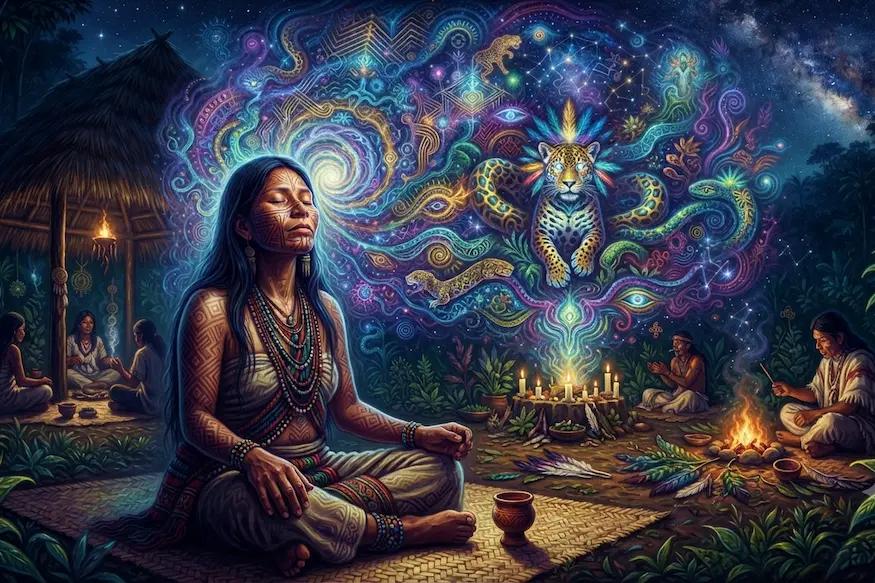
Many people are curious about ayahuasca visions long before they attend their first ceremony. They wonder what they might see, whether the visions have a deeper meaning, and if everyone experiences the same thing.
The truth is that no two ayahuasca journeys are exactly alike. Some people encounter vivid geometric patterns, animals, or ancestral imagery, while others relive forgotten memories, experience profound emotions, or simply feel a deep sense of peace without seeing any images at all.
Although visions are one of the most well-known aspects of ayahuasca, they are only one part of a much broader healing process. Their meaning depends on your personal history, emotional state, intention, and the ceremonial environment—not on a universal dictionary of symbols.
In this guide, we’ll explain what ayahuasca visions are, why they occur, what science and Indigenous traditions say about them, and how to approach them with curiosity rather than certainty.
If you’d like to learn more about ayahuasca before exploring its visions, read our complete guide on What Is Ayahuasca?
What Are Ayahuasca Visions?
Ayahuasca visions are the mental images, symbolic experiences, emotions, memories, and altered states of perception that many people report during a ceremony.
Unlike ordinary dreams, these experiences often feel exceptionally vivid and emotionally meaningful. Participants frequently describe them as more real than imagination, yet they remain highly personal and subjective.
Visions may include:
- Sacred geometric patterns
- Vibrant colors and changing landscapes
- Animals such as snakes, jaguars, birds, or butterflies
- Encounters with loved ones or ancestors
- Childhood memories
- Symbolic life events
- Feelings of unity with nature
- Spiritual or mystical experiences
- Deep emotional release without visual imagery
It’s important to understand that ayahuasca is not simply about “seeing things.” For many participants, the most meaningful part of the experience is the emotional insight or personal realization that accompanies—or even replaces—visual phenomena.
Visions Are Different for Everyone
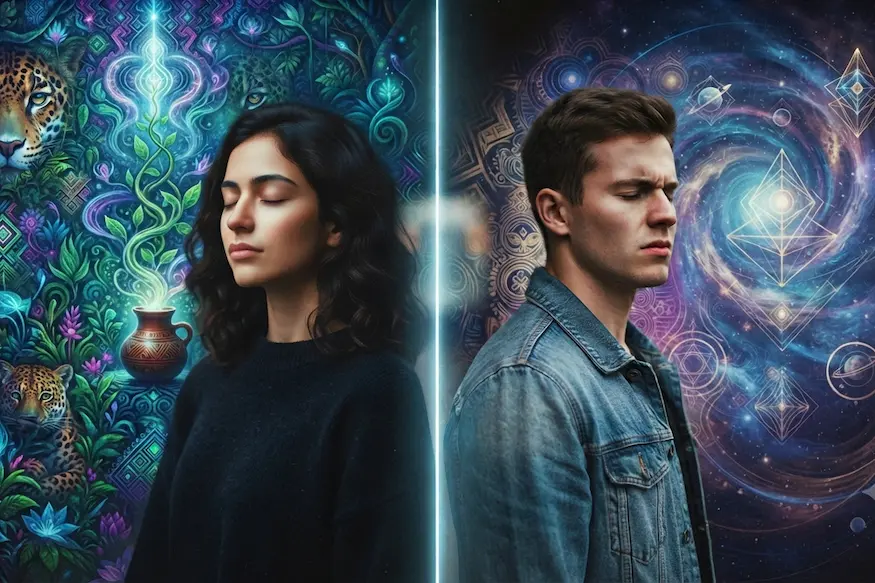
One of the biggest misconceptions is that everyone drinks ayahuasca and immediately sees colorful visions.
In reality, experiences vary enormously.
Some participants spend several hours immersed in detailed visual landscapes.
Others experience:
- Strong emotions
- Physical sensations
- Powerful introspection
- A feeling of connection
- Mental clarity
- Deep silence
without seeing any obvious images.
This doesn’t mean the ceremony was less meaningful. In many traditions, healing is not measured by how spectacular the visions are but by the lasting changes they inspire afterward.
👉 Learn more about How to Prepare for Ayahuasca
Are Ayahuasca Visions Hallucinations?
This is one of the most common questions.
From a neuroscience perspective, ayahuasca alters brain activity, changing the way different regions communicate and process perception, memory, and emotion. The resulting visual experiences are often described as internally generated rather than responses to the outside world.
However, Indigenous Amazonian traditions generally understand these experiences differently. Many view the visions as part of a spiritual learning process, a way of receiving guidance, or an opportunity to explore aspects of oneself and one’s relationship with nature.
Neither perspective completely explains every individual’s experience.
For this reason, many facilitators encourage participants to approach their visions with openness rather than trying to immediately label them as either purely neurological or purely supernatural.
Why Does Ayahuasca Produce Visions?
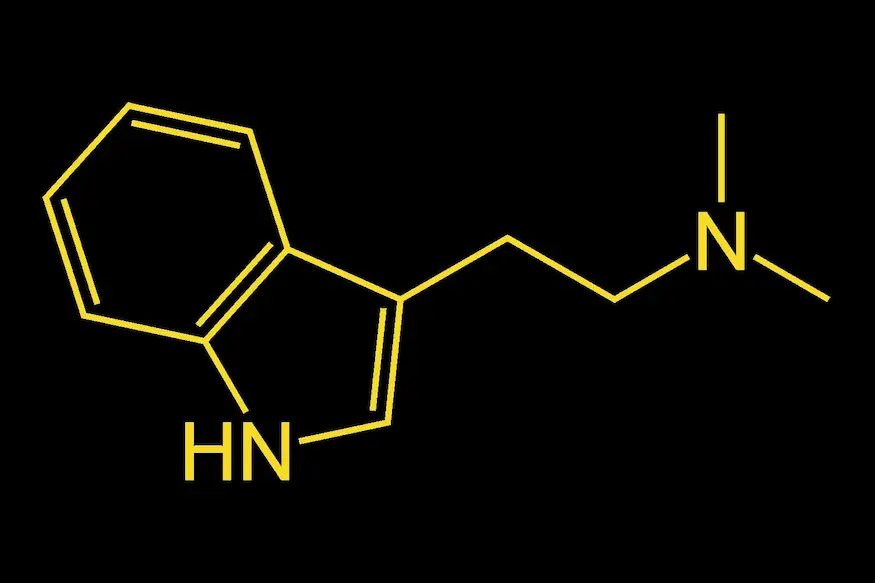
Ayahuasca is traditionally prepared by combining the Banisteriopsis caapi vine with leaves that contain naturally occurring DMT, most commonly Psychotria viridis (Chacruna).
Together, these plants temporarily alter normal patterns of brain activity, allowing thoughts, memories, emotions, and sensory experiences to unfold in ways that are very different from ordinary waking consciousness.
Researchers believe that several processes contribute to ayahuasca visions.
Increased Communication Between Brain Regions
During everyday life, different parts of the brain perform specialized tasks.
Under ayahuasca, these networks appear to communicate more freely than usual.
As a result, memories, emotions, imagination, and sensory processing may become deeply interconnected.
This may help explain why a simple childhood memory can suddenly appear surrounded by vivid symbols, colors, or powerful emotions.
Emotional Memories Become More Accessible
Many participants report revisiting moments from childhood, relationships, grief, or significant life events.
These experiences are often accompanied by strong emotions that may have remained unresolved for years.
Rather than randomly producing images, ayahuasca often seems to bring attention toward experiences that feel personally significant.
The Mind Thinks in Symbols
The human brain naturally organizes information through stories, metaphors, and symbols.
Dreams do this.
Art does this.
Religious traditions do this.
Ayahuasca experiences frequently follow the same pattern.
Instead of presenting a direct answer, the experience may communicate through symbolic imagery that encourages personal reflection.
For example, someone working through fear might encounter a powerful predator.
Someone beginning a new chapter in life may repeatedly see butterflies or flowing rivers.
These images do not necessarily have universal meanings—they often reflect the participant’s own experiences, culture, and emotional landscape.
Set, Setting, and Intention Matter
Your mindset before the ceremony plays an important role.
Factors that may influence your experience include:
- Your emotional state
- Personal intentions
- Previous life experiences
- The ceremonial environment
- The music played during the ceremony
- Trust in the facilitators
- Your sense of safety
For this reason, two people drinking the same brew in the same ceremony may experience completely different visions.
What Do Ayahuasca Visions Feel Like?
People often imagine ayahuasca visions as watching a movie with their eyes closed.
In reality, the experience is usually much richer and more complex.
Some participants describe entering vivid inner worlds filled with colors and movement, while others feel as though they are observing their own thoughts from a completely new perspective.
Many people alternate between visual experiences and periods of deep emotional insight throughout the ceremony.
Common Visual Experiences
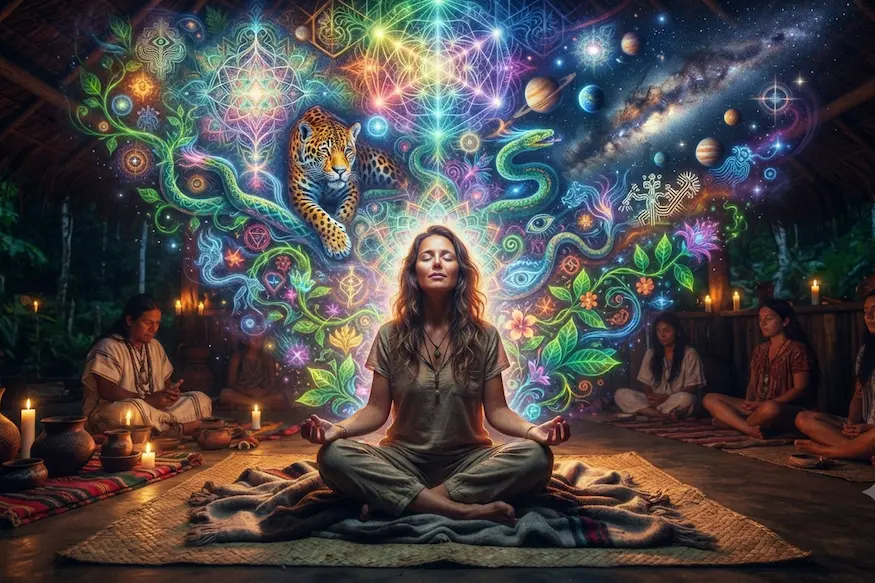
Some of the most frequently reported visual elements include:
- Intricate geometric patterns
- Flowing fractals
- Bright colors
- Ancient symbols
- Forest landscapes
- Rivers and waterfalls
- Mountains
- Stars
- Light beings
- Animals
- Faces
- Sacred architecture
The intensity of these visuals varies widely from person to person.
Emotional Experiences
Often, the emotional component becomes even more significant than the visuals themselves.
Participants commonly report:
- Compassion toward themselves
- Forgiveness
- Gratitude
- Love
- Sadness
- Joy
- Relief
- Acceptance
- Emotional release
- A renewed appreciation for life
These emotions can arise suddenly and may feel deeply connected to the imagery being experienced.
Physical Sensations
Ayahuasca also affects the body.
Common sensations include:
- Warmth
- Tingling
- Changes in body temperature
- Feeling light or heavy
- Increased awareness of breathing
- Nausea
- Purging
- Deep relaxation
These physical experiences are often intertwined with the emotional and symbolic aspects of the ceremony.
Experiences Without Images
One of the most surprising facts is that some participants never experience visual imagery at all.
Instead, they may leave the ceremony with:
- Greater emotional clarity
- A profound sense of peace
- New perspectives on life
- Improved self-awareness
- A feeling of connection with nature
- A clearer understanding of personal relationships
This is completely normal.
Many experienced facilitators emphasize that the depth of healing cannot be measured by the intensity of the visions.
Sometimes the most transformative ceremonies are also the quietest.
Common Ayahuasca Symbols and Their Possible Meanings
| Symbol | Common Theme | Is the Meaning Universal? |
|---|---|---|
| Snake | Transformation and healing | No |
| Jaguar | Courage and protection | No |
| Eagle | Perspective and freedom | No |
| Butterfly | Personal growth and rebirth | No |
| River | Emotional flow and change | No |
| Forest | Self-discovery | No |
| Fire | Purification | No |
| Water | Emotional healing | No |
| Mountain | Overcoming challenges | No |
| Tree | Stability and growth | No |
| Sun | Clarity | No |
| Moon | Intuition | No |
| Stars | Connection to the universe | No |
| Child | Inner child | No |
| Ancestors | Family and guidance | No |
| Death | Transformation and endings | No |
| Birth | New beginnings | No |
| Sacred Geometry | Harmony and interconnectedness | No |
| Eyes | Awareness | No |
| Light | Peace and compassion | No |
| Darkness | Self-reflection | No |
| Spiral | Personal evolution | No |
| Temple | Spiritual learning | No |
| Spider | Creativity and patience | No |
| Hummingbird | Joy and resilience | No |
| Owl | Wisdom and intuition | No |
| Deer | Gentleness and vulnerability | No |
| Ocean | Emotional depth | No |
| Waterfall | Cleansing and renewal | No |
| Condor | Higher perspective | No |
Why Do Two People Experience Completely Different Ayahuasca Visions?
One of the most common questions after an ayahuasca ceremony is why two people who drank the same brew, sat in the same room, and participated in the same ceremony can have completely different experiences.
The answer is that ayahuasca does not create identical visions for everyone. Instead, the experience is shaped by a unique combination of biological, psychological, emotional, and environmental factors.
Think of ayahuasca as opening a door rather than showing everyone the same movie. What appears beyond that door depends on each person’s life experiences, emotional state, beliefs, intentions, and current circumstances.
Below are some of the main factors that may influence ayahuasca visions.
Your Personal History

Every person carries a unique collection of memories, emotions, relationships, and life experiences.
Because of this, ayahuasca often brings attention to themes that are personally relevant rather than showing universal images.
For example, two participants may both see water.
For one person, water may represent freedom because they grew up near the ocean.
For another, it may trigger memories of loss or fear connected to a difficult life event.
The symbol is similar, but the emotional meaning is completely different.
Your Emotional State Before the Ceremony
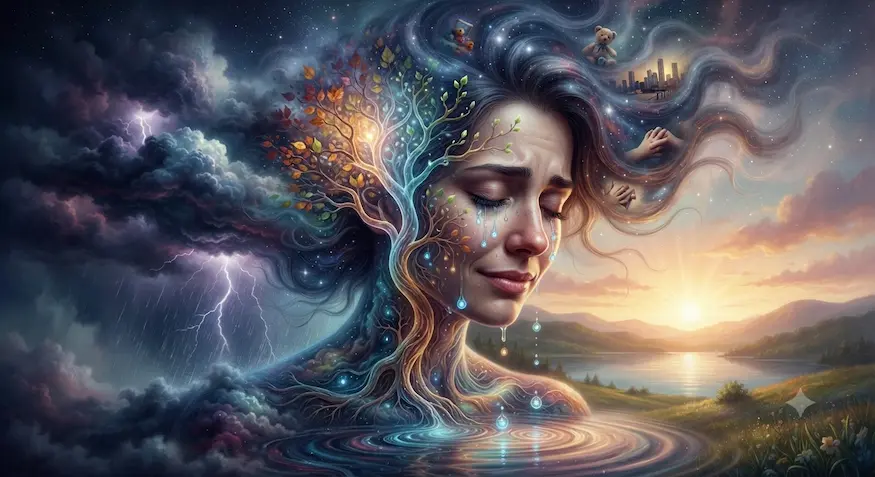
How you feel before drinking ayahuasca can influence your experience.
Someone arriving with unresolved grief may experience memories related to loved ones.
Someone struggling with anxiety may encounter symbolic representations of fear before reaching moments of clarity.
This is one reason many retreat centers emphasize preparation, rest, and emotional readiness before the ceremony.
Your Intention
Many participants enter a ceremony with an intention, such as:
- Understanding a relationship
- Healing emotional pain
- Finding direction in life
- Learning more about themselves
Although ayahuasca does not always respond in the way people expect, intentions often help focus attention on meaningful areas of personal growth.
The Ceremonial Environment
The setting plays a much bigger role than many first-time participants realize.
Several factors can influence the overall experience, including:
- Feeling physically safe
- Trust in the facilitators
- The presence of experienced shamans
- The ceremonial music
- The surrounding natural environment
- The size of the group
- The level of emotional support available
A calm and supportive environment allows many participants to relax more deeply into the experience.
Every Journey Is Unique
It can be tempting to compare your ceremony with someone else’s.
However, experienced facilitators often remind participants that comparison rarely helps.
A quiet ceremony without dramatic visions may still produce profound emotional healing.
Likewise, an intensely visual experience does not automatically lead to lasting personal growth.
The value of a ceremony is better measured by the positive changes that unfold afterward than by the intensity of the visions themselves.
Can Ayahuasca Show the Future?
This is one of the most frequently asked questions about ayahuasca.
Some participants leave a ceremony feeling as though they received glimpses of future events, while others experience symbolic visions that later seem connected to real-life situations.
However, there is no scientific evidence that ayahuasca can literally predict the future.
Many researchers suggest that ayahuasca enhances pattern recognition, emotional awareness, and introspection. During the ceremony, the mind may connect memories, emotions, and possibilities in ways that create a powerful sense of insight.
At the same time, many Indigenous traditions understand these experiences differently, viewing certain visions as meaningful guidance rather than predictions.
Both perspectives can coexist without requiring certainty.
Instead of asking whether a vision is a prophecy, it may be more helpful to ask:
- What is this experience encouraging me to notice?
- Does it reveal something about my current choices?
- How can I apply this insight in a healthy and practical way?
Approaching visions with curiosity rather than certainty often leads to more balanced and meaningful integration.
Why Didn’t I Have Any Visions?
Many first-time participants expect vivid visual experiences.
When those images never appear, they sometimes worry that the ceremony “didn’t work.”
In reality, not having visions is completely normal.
Ayahuasca affects people differently, and healing does not always happen through visual imagery.
Some participants experience:
- Deep emotional release
- Physical relaxation
- Mental clarity
- Profound silence
- Increased self-awareness
- A renewed sense of peace
without seeing any obvious images at all.
In many ceremonies, these subtle experiences become the most meaningful part of the journey.
Some experienced participants even report that their quietest ceremonies produced their greatest personal breakthroughs.
Rather than judging the ceremony by the number of visions you experienced, it can be more helpful to reflect on how you feel in the days and weeks afterward.
Why Are Some Ayahuasca Visions Scary?
Not every ayahuasca experience feels comfortable.
Some participants encounter darkness, unfamiliar creatures, difficult memories, or intense emotional situations.
Although these moments can feel overwhelming, they are often temporary and do not necessarily indicate that something has gone wrong.
Many facilitators explain that challenging experiences may arise when unresolved fears, grief, guilt, or emotional pain reach conscious awareness.
Facing these emotions can be difficult, but for some people it also becomes an important part of the healing process.
Common challenging experiences may include:
- Feeling lost
- Confronting personal fears
- Reliving painful memories
- Encountering symbolic death
- Feeling emotionally vulnerable
These experiences should always be supported by experienced facilitators who can provide reassurance and help participants remain grounded throughout the ceremony.
When Should You Be Concerned?
Feeling challenged during a ceremony is different from being placed in an unsafe environment.
A well-organized retreat should include:
- Careful medical screening
- Experienced ceremonial leaders
- Clear safety protocols
- Emotional support during the ceremony
- Integration after the experience
Feeling emotionally challenged can be part of the process, but participants should always feel physically safe and supported.
Why Are Some Ayahuasca Visions Beautiful?
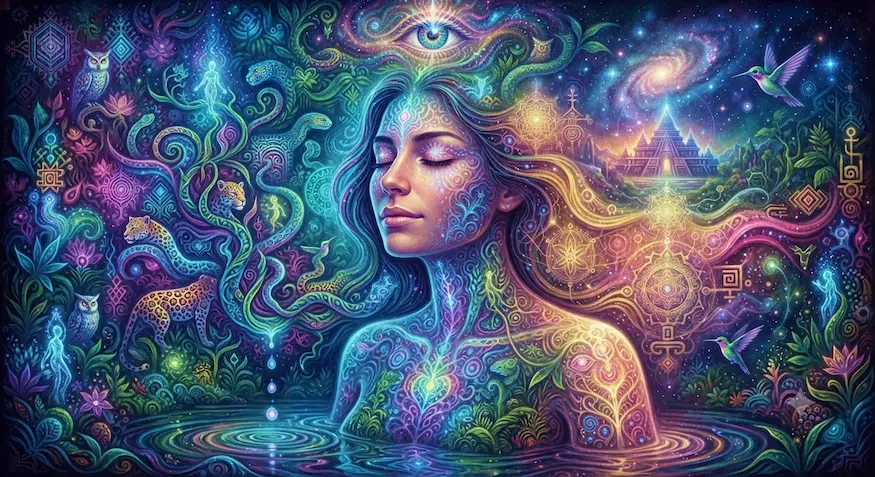
While much attention is given to difficult ceremonies, many participants describe experiences filled with beauty, gratitude, and connection.
These moments may include:
- Brilliant colors
- Peaceful landscapes
- Feelings of unconditional love
- Connection with nature
- Deep gratitude
- Compassion toward oneself and others
Some people report that these experiences inspire lasting changes in how they view relationships, work, health, or their place in the world.
However, experienced facilitators often remind participants that beautiful visions are not the ultimate goal.
The real value lies in how those insights are integrated into daily life.
Open-Eye vs. Closed-Eye Visions
Ayahuasca visions can occur with both closed and open eyes, although the experiences often feel different.
With closed eyes, participants frequently report vivid inner imagery, symbolic scenes, geometric patterns, and dream-like landscapes. Many describe these visions as deeply immersive and emotionally meaningful.
With open eyes, the experience may be more subtle. Colors can appear brighter, natural surroundings may seem more alive, and patterns or movement may become more noticeable. Rather than seeing entirely new worlds, many participants experience an enhanced perception of the environment around them.
Some people alternate between both types of visions throughout the ceremony, while others experience mostly one or the other. There is no “correct” way to experience ayahuasca, and neither form is considered more meaningful than the other.
Should You Interpret Every Symbol Literally?
One of the biggest misconceptions about ayahuasca is that every vision has a single, fixed meaning.
In reality, symbols are deeply personal.
While certain images—such as snakes, rivers, or mountains—appear frequently in ceremonies around the world, their significance depends on the participant’s life experiences, emotions, beliefs, and current circumstances.
For example, seeing a butterfly might represent personal transformation for one person. For another, it could simply remind them of a meaningful childhood memory.
Rather than searching for an online dictionary that claims to explain every vision, consider asking yourself:
- What emotions did this symbol evoke?
- Why might it have appeared now?
- Does it relate to something happening in my life?
- What lesson, if any, can I take from this experience?
These questions often lead to more meaningful insights than trying to find a universal interpretation.
Common Mistakes When Interpreting Ayahuasca Visions
After a powerful ceremony, it’s natural to want immediate answers.
However, rushing to interpret every image can sometimes create confusion instead of clarity.
Some common mistakes include:
Assuming Every Vision Is Literal
Not every image should be understood as a prediction or objective truth.
Ayahuasca often communicates through symbolism, emotions, memories, and metaphors.
Looking for Universal Meanings
No website can accurately tell you exactly what your vision meant.
Your personal experiences always matter more than generalized interpretations.
Ignoring the Emotional Context
Sometimes the emotions accompanying a vision are far more important than the visual imagery itself.
Ask yourself:
How did I feel?
The answer may provide greater insight than focusing only on what you saw.
Expecting Immediate Understanding
Some visions make sense immediately.
Others may only become meaningful weeks or even months after the ceremony.
Allow yourself time before drawing conclusions.
How to Integrate Your Ayahuasca Visions
The ceremony is only the beginning.
Many experienced facilitators believe that the real healing process starts after returning home.
Without reflection and integration, even profound experiences can gradually fade into memory.
Here are several practices that may help.
Write Everything Down
Memories can disappear surprisingly quickly.
As soon as possible after the ceremony, write down:
- Symbols you remember
- Emotions you experienced
- Important realizations
- Questions that remain
- Moments that felt especially meaningful
A journal often becomes valuable weeks or months later when new connections begin to appear.
Reflect Instead of Rushing
You don’t need to understand every vision immediately.
Sometimes simply observing your experience without forcing conclusions allows deeper insights to emerge naturally.
Continue Healthy Habits
Many participants notice that positive changes become easier to maintain when they continue healthy routines after the ceremony.
These may include:
- Meditation
- Time in nature
- Exercise
- Nutritious food
- Adequate sleep
- Mindfulness practices
Talk With Someone You Trust
Speaking with an experienced facilitator, therapist, or trusted friend can help organize your thoughts and prevent unnecessary confusion.
Sometimes hearing yourself explain the experience provides clarity on its own.
Focus on Real-Life Changes
Rather than asking:
“What did the snake mean?”
Ask instead:
“How can this experience help me become a better version of myself?”
Ultimately, the value of a ceremony lies in the positive changes it inspires in daily life.
Expert Tips for Understanding Ayahuasca Visions
Based on observations from experienced facilitators and the integration process commonly recommended after ceremonies, the following practices can help you better understand your experience.
Don’t Compare Your Journey
Every ceremony is different.
Someone else’s visions have no influence on the value of your own experience.
Stay Curious
Approach your visions with openness rather than certainty.
Sometimes asking better questions is more valuable than finding quick answers.
Give Yourself Time
Insights often continue developing long after the ceremony has ended.
Allow yourself weeks—or even months—to process the experience.
Remember That Healing Isn’t Measured by Visual Intensity
Some of the most transformative ceremonies include very few visual experiences.
Healing can happen through emotions, reflection, forgiveness, or simply developing a new perspective on life.
Frequently Asked Questions About Ayahuasca Visions
Are ayahuasca visions real?
They are real experiences for the person having them. Whether they are understood as neurological, psychological, spiritual, or a combination of these perspectives depends on individual beliefs and traditions.
Does everyone have visions during ayahuasca?
No.
Some participants experience vivid imagery, while others primarily experience emotions, memories, physical sensations, or deep introspection.
Why do people often see snakes?
Snakes are among the most commonly reported symbols in ayahuasca ceremonies. Many people associate them with transformation, healing, and renewal, although their meaning is always personal.
Can ayahuasca predict the future?
There is no scientific evidence that ayahuasca predicts future events. Many people interpret certain visions as meaningful guidance rather than literal predictions.
Why didn’t I see anything?
Not having visual experiences is completely normal and does not mean the ceremony failed.
Many participants receive emotional insights without visual imagery.
Are frightening visions normal?
They can be.
Some ceremonies involve confronting fears, unresolved emotions, or difficult memories. In a safe and supportive environment, these experiences may become meaningful parts of the healing process.
Can I control my visions?
Most participants find that the experience unfolds naturally.
Trying to force or control the visions often creates unnecessary resistance.
Why do I forget my visions afterward?
Like dreams, some details fade quickly.
Writing in a journal immediately after the ceremony can help preserve important memories.
Can two people see similar visions?
Yes.
Certain symbols appear frequently across many ceremonies, although each person’s interpretation remains unique.
What if I only cried during the ceremony?
Emotional release is often considered just as meaningful as visual experiences.
Healing does not always occur through images.
Do ayahuasca visions continue after the ceremony?
Some participants report new insights, dreams, or emotional reflections in the days and weeks that follow, even after the immediate effects have ended.
Should I search online for every symbol?
General information can be interesting, but your personal experiences and emotional responses are usually more valuable than universal interpretations.
Are closed-eye visions more meaningful than open-eye visions?
Not necessarily.
Both experiences can be equally valuable depending on the individual.
Can music influence ayahuasca visions?
Many participants report that ceremonial songs and music can influence the emotional tone and flow of their experience.
What matters most after the ceremony?
The lasting changes you make in your daily life are often far more important than the visions themselves.
Final Thoughts
Ayahuasca visions can be beautiful, mysterious, emotional, challenging, or surprisingly quiet. While many people remember the striking imagery, the true value of the experience often lies in the personal growth that follows.
Rather than searching for fixed meanings, approach your visions with curiosity, patience, and self-reflection. Over time, what initially seemed confusing may become one of the most meaningful parts of your journey.
Ultimately, ayahuasca is not about collecting extraordinary visions—it’s about developing greater awareness, healing emotional wounds, and creating lasting positive change in everyday life.
Ready to Experience Ayahuasca in a Safe and Supportive Environment?
If you’re considering your first ayahuasca ceremony—or looking for a retreat that prioritizes preparation, experienced facilitators, and post-ceremony integration—explore our Ayaterra Center Ayahuasca Retreats.
Our retreats combine traditional Amazonian practices with a safe, respectful, and supportive environment designed to help participants navigate every stage of their journey, from preparation to integration.
More about Ayahuasca Safety Guide