

Ayahuasca should not be treated like an ordinary herbal drink. Its active compounds affect serotonin and temporarily inhibit an enzyme involved in metabolizing several neurotransmitters and medications.
For this reason, combining ayahuasca with antidepressants—including SSRIs, SNRIs, and MAOIs—may cause serious and potentially life-threatening interactions.
Anyone considering an ayahuasca ceremony must disclose every prescription medicine, non-prescription product, supplement, and recreational substance they use. Medication should never be stopped or reduced without guidance from the healthcare professional who prescribed it.
Medical disclaimer: This article is for educational purposes only. It does not provide medical advice or individual clearance for ayahuasca. Never discontinue or alter medication to attend a ceremony without consulting the prescribing healthcare professional.
Can You Take Ayahuasca While Using Antidepressants?
Combining ayahuasca with antidepressants is generally considered unsafe unless a qualified medical professional has carefully evaluated the individual situation.
The greatest concerns involve medications that affect serotonin or monoamine oxidase. These include many:
Selective serotonin reuptake inhibitors, or SSRIs.
Serotonin–norepinephrine reuptake inhibitors, or SNRIs.
Monoamine oxidase inhibitors, or MAOIs.
Tricyclic antidepressants, or TCAs.
Atypical antidepressants with serotonergic activity.
Other psychiatric medications that interact with serotonin receptors or metabolism.
The exact risk depends on the medication, dosage, duration of treatment, other substances being taken, physical health, and psychiatric history.
However, uncertainty does not make a combination safe. Research on ayahuasca–medication interactions remains limited, and most controlled studies exclude participants taking potentially interacting drugs.
Why Does Ayahuasca Interact With Antidepressants?
Traditional ayahuasca preparations typically combine two plants:
Banisteriopsis caapi, which contains harmine, harmaline, and tetrahydroharmine.
A DMT-containing plant, commonly Psychotria viridis.
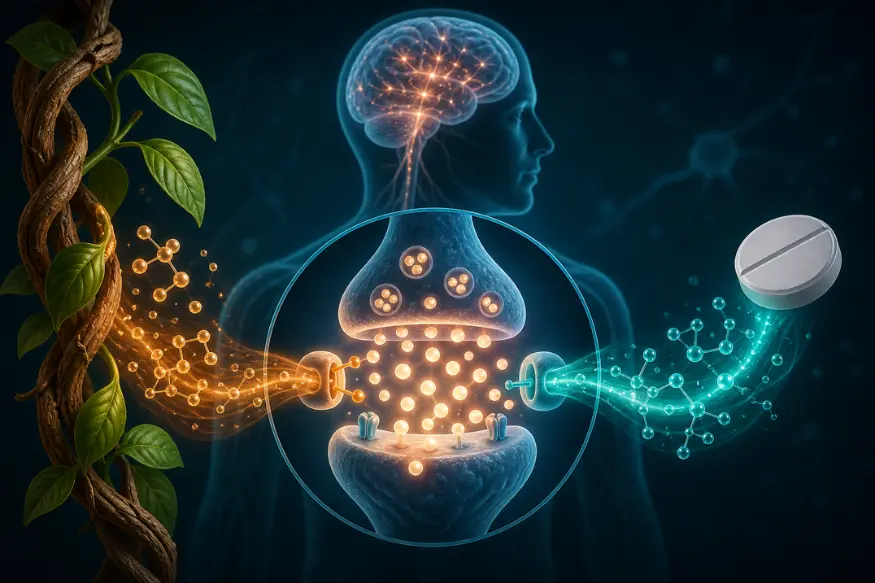
DMT is normally broken down in the digestive system before producing psychedelic effects. Harmala alkaloids in the ayahuasca vine temporarily inhibit monoamine oxidase A, or MAO-A, allowing orally consumed DMT to become active.
This interaction is fundamental to ayahuasca’s effects, but it also creates the potential for interactions with medications that influence serotonin, norepinephrine, dopamine, or the enzymes that metabolize these chemicals.
Ayahuasca’s composition is not standardized. The concentration of DMT and harmala alkaloids may vary considerably between preparations, making interactions even more difficult to predict.
Ayahuasca and SSRIs

SSRIs increase serotonin availability by reducing its reuptake in the brain. Common generic examples include
Fluoxetine.
Sertraline.
Citalopram.
Escitalopram.
Paroxetine.
Fluvoxamine.
This list is provided for recognition, not as an exhaustive medication guide.
Combining an SSRI with the MAO-A-inhibiting compounds found in ayahuasca may lead to excessive serotonergic activity. Medical literature has described a case involving symptoms consistent with serotonin toxicity after ayahuasca was consumed while the individual was receiving fluoxetine.
The number of documented cases is small, and some aspects of the interaction remain uncertain. Nevertheless, the potential severity means that ayahuasca and SSRIs should not be combined casually.
SSRIs may also change the subjective effects of psychedelics. Some research suggests that chronic antidepressant use could reduce certain psychedelic effects, but attempting to compensate by consuming more ayahuasca would increase unpredictability and risk.
Ayahuasca and SNRIs
SNRIs affect both serotonin and norepinephrine. Examples include:
Venlafaxine.
Desvenlafaxine.
Duloxetine.
Levomilnacipran.
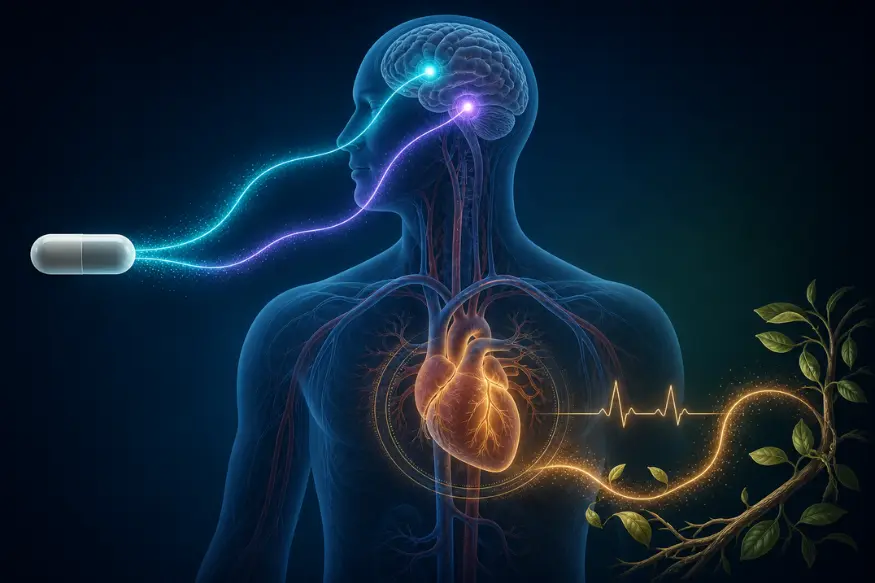
Combining SNRIs with ayahuasca may increase concerns related to serotonin toxicity, blood pressure, and heart rate.
Because ayahuasca can produce temporary cardiovascular changes, the additional norepinephrine activity associated with SNRIs may be especially relevant for people with hypertension, heart disease, or other cardiovascular risk factors.
An SNRI should never be discontinued abruptly to attend a retreat. Sudden withdrawal can cause significant physical and psychological symptoms.
Ayahuasca and MAOIs
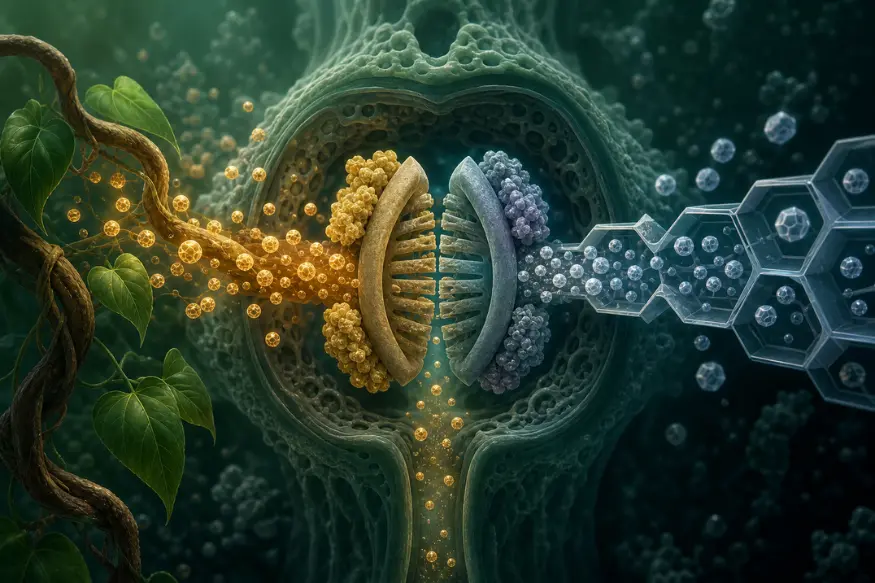
Prescription MAOIs include medications such as
Phenelzine.
Tranylcypromine.
Isocarboxazid.
Selegiline in certain forms or dosages.
Ayahuasca already contains reversible MAO-A-inhibiting compounds. Combining it with another MAOI could produce excessive or prolonged enzyme inhibition, increasing the possibility of dangerous drug and food interactions.
Potential consequences may include serotonin toxicity, severe blood-pressure changes, and other unpredictable reactions.
People taking an MAOI should not combine it with ayahuasca. This also applies to certain non-psychiatric medications with MAO-inhibiting properties, such as linezolid or methylene blue in particular clinical contexts.
Ayahuasca and Tricyclic Antidepressants
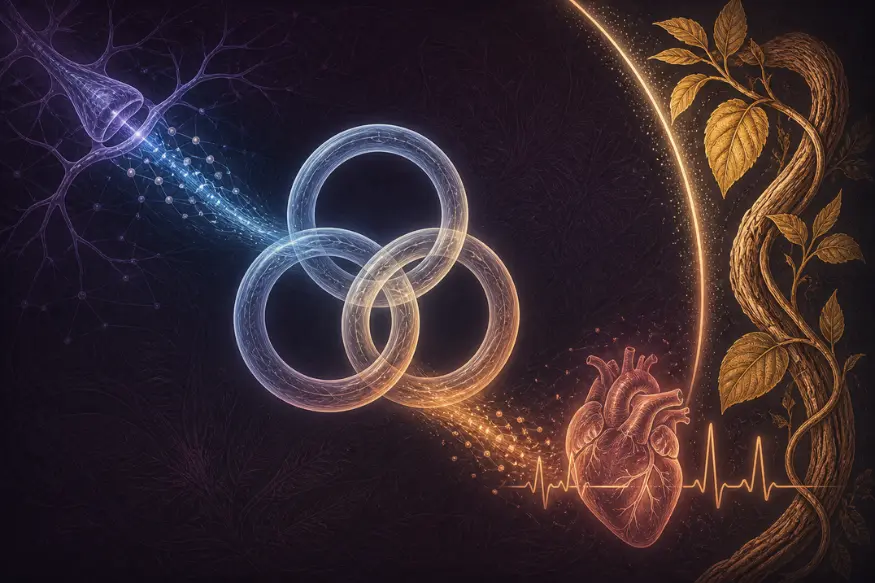
Tricyclic antidepressants can affect serotonin, norepinephrine, heart rhythm, and blood pressure. Examples include:
Amitriptyline.
Clomipramine.
Imipramine.
Nortriptyline.
Their pharmacological effects vary, and some have stronger serotonergic activity than others. Possible interactions with ayahuasca may involve serotonin toxicity, cardiovascular complications, sedation, confusion, or changes in seizure threshold.
A complete medical review is necessary. The fact that a medication belongs to an older antidepressant class does not make it safer to combine with ayahuasca.
What About Other Antidepressants?
Medications such as trazodone, mirtazapine, vortioxetine, vilazodone, and bupropion have different mechanisms and cannot all be placed into a single risk category.
Some affect serotonin directly, while others may influence norepinephrine, dopamine, sedation, blood pressure, or seizure threshold. Participants should not assume that a medication is compatible simply because it is not an SSRI.
The exact generic name, dosage, and treatment schedule must be evaluated. Brand names alone may be insufficient because they vary between countries.
What Is Serotonin Syndrome?
Serotonin syndrome—also called serotonin toxicity—is a potentially life-threatening reaction caused by excessive serotonergic activity.
Symptoms can begin within hours and may include:
Agitation, anxiety, or confusion.
Heavy sweating.
Shivering or tremors.
Muscle twitching or rigidity.
Dilated pupils.
Diarrhea.
Rapid heart rate.
Significant changes in blood pressure.
High body temperature.
Loss of coordination.
Severe cases may involve seizures, dangerous hyperthermia, loss of consciousness, or organ complications.
Some early symptoms can resemble expected ayahuasca effects. Nausea, vomiting, sweating, and changes in perception should therefore never automatically be dismissed as “purging.”
A person displaying severe confusion, muscle rigidity, seizures, very high temperature, chest pain, breathing difficulties, or loss of consciousness needs urgent medical attention.
Other Medications That May Interact With Ayahuasca
Antidepressants are not the only concern. Other potentially interacting medications and substances may include:
Stimulants and some ADHD medications.
Certain migraine medicines, including triptans.
Dextromethorphan, found in some cough products.
Tramadol and some other serotonergic pain medicines.
Lithium.
Buspirone.
Certain antipsychotic medications.
Some anti-nausea medications with serotonergic effects.
Medications that significantly affect blood pressure or heart rhythm.
Other MAO-inhibiting drugs.
This is not a complete contraindication list. Over-the-counter products can also contain multiple active ingredients, and formulations differ across countries.
Supplements and Recreational Substances
“Natural” does not automatically mean compatible with ayahuasca. Products of concern may include:
St. John’s wort.
5-HTP.
Tryptophan supplements.
Ginseng.
Syrian rue or isolated harmala alkaloids.
Other mood-enhancing or stimulant supplements.
Recreational substances may also create dangerous interactions, particularly:
MDMA.
Cocaine.
Amphetamines.
Other stimulants.
5-MeO-DMT.
Other psychedelics or unknown psychoactive mixtures.
Alcohol, cannabis, and sedatives may also affect judgment, psychological stability, coordination, and the overall predictability of the experience.
A responsible screening process must include supplements and recreational substances—not only prescription medication.
Can You Stop Antidepressants Before Ayahuasca?
Do not stop antidepressants independently to attend an ayahuasca ceremony.
Discontinuation may cause:
Anxiety or agitation.
Dizziness and nausea.
Sleep disruption.
Flu-like sensations.
Electric-shock-like sensations.
Recurrence of depression.
Suicidal thoughts.
Hypomania, mania, or mood instability.
Some medications require a gradual, medically supervised taper. Others remain in the body for a considerable period after the final dose.
There is no universal washout period that is safe for every medication or every person. A timeline found on a retreat website or internet forum cannot replace individualized medical guidance.
Only the prescribing professional should decide:
Whether discontinuation is medically appropriate.
How the medication should be reduced.
How long monitoring is required.
Whether the underlying condition makes ayahuasca unsuitable even after discontinuation.
A retreat should never pressure someone to stop prescribed treatment.
Why Medication Screening Must Happen Before Booking
Medical screening should take place before a participant pays for flights, accommodation, or a non-refundable retreat.
The screening should request:
Exact medication names and dosages.
How long each medication has been used.
The condition for which it was prescribed.
Recent medication changes.
Previous withdrawal reactions.
Psychiatric diagnoses and hospitalizations.
History of psychosis, mania, seizures, or suicidal behavior.
Supplements and recreational substance use.
Cardiovascular and neurological history.
Participants should provide complete and honest information. Hiding medication use to gain acceptance places the participant, facilitators, and other guests at risk.
Warning Signs of an Unsafe Retreat
Consider it a serious warning sign if a facilitator:
Says every antidepressant has the same washout period.
Advises abrupt medication discontinuation.
Claims ayahuasca cannot interact with prescription drugs.
Dismisses serotonin syndrome as a myth.
Accepts participants without health screening.
Encourages people to hide information from their doctor.
Presents ayahuasca as a guaranteed replacement for psychiatric treatment.
Has no emergency procedure or access to medical assistance.
Traditional knowledge and medical screening should support each other. Respect for ayahuasca does not require ignoring pharmacology.
Final Considerations
Ayahuasca contains compounds that inhibit MAO-A and interact with serotonin-related systems. Combining it with SSRIs, SNRIs, MAOIs, and other serotonergic medications may produce serious and potentially life-threatening reactions.
Current research does not establish that every possible combination will cause harm, but the evidence is also insufficient to guarantee safety. The potential consequences require a cautious approach.
Never stop medication to attend a ceremony without working with the healthcare professional responsible for the treatment. A responsible retreat should prioritize participant safety over accepting every reservation.
Before making a decision, review the complete guide to ayahuasca contraindications and learn more about general ayahuasca risks.
Frequently Asked Questions
Can I take ayahuasca while using an SSRI?
Combining ayahuasca with an SSRI may increase the risk of serotonin toxicity. It should not be attempted without an individualized assessment from the prescribing healthcare professional.
How long must I stop antidepressants before ayahuasca?
There is no universal safe period. It depends on the medication, dosage, half-life, duration of treatment, medical history, and withdrawal risks. Never determine this timeline independently.
Can ayahuasca cause serotonin syndrome?
The combination of ayahuasca’s MAO-A-inhibiting compounds with serotonergic drugs may create serotonin toxicity. Documented evidence is limited, but the potential reaction can be serious.
Is bupropion safe with ayahuasca?
Bupropion has a different mechanism from SSRIs, but it may influence seizure threshold and other neurological processes. Its suitability requires professional review and should not be assumed.
Can I take ayahuasca after stopping medication?
Stopping medication does not automatically make ayahuasca safe. The medicine may remain in the body, withdrawal may be ongoing, and the underlying psychiatric or medical condition may itself be a contraindication.
Should I tell the retreat about supplements?
Yes. Supplements, herbs, non-prescription products, and recreational substances can also interact with ayahuasca and must be included during screening.