

Ayahuasca Risks
Ayahuasca has become one of the most sought-after spiritual experiences in the world. Every year, thousands of travelers visit Peru searching for healing, self-discovery, emotional release, and spiritual connection through traditional ayahuasca ceremonies.
However, despite its growing popularity, many people still underestimate the potential risks involved.
Ayahuasca is not a recreational experience. It is a powerful Amazonian plant medicine that can deeply affect the mind, emotions, and body. While many participants report life-changing experiences, there are also important physical, psychological, and environmental risks that every person should understand before attending a retreat.
In this guide, we will explain the real risks of ayahuasca, how to reduce them, and how to choose a safe and authentic retreat in Peru.
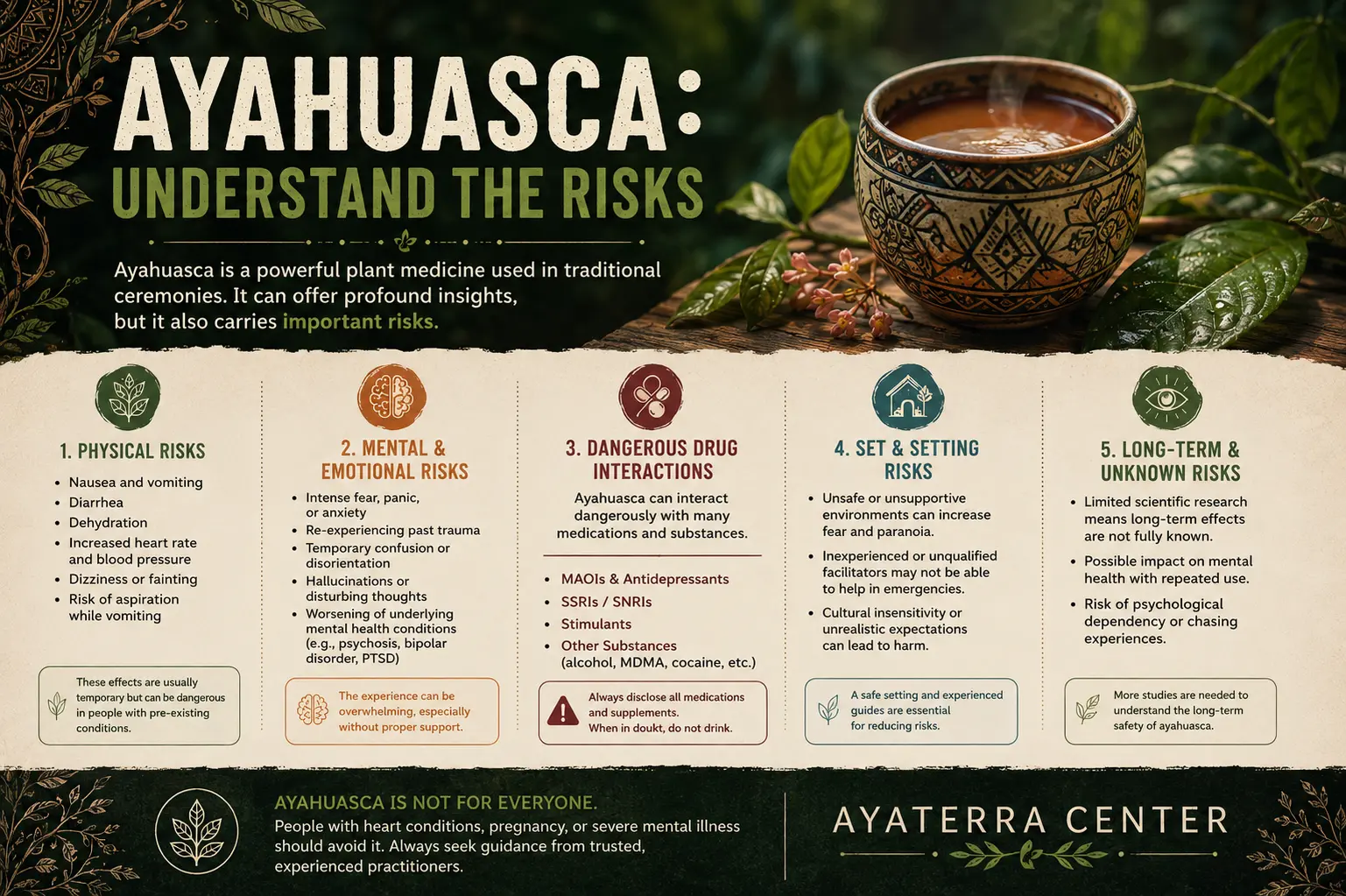
Is Ayahuasca Dangerous?
Ayahuasca can be safe in controlled and properly guided environments, but it is not risk-free.
The experience can become dangerous when:
- Participants have certain medical conditions
- Medications interact negatively with ayahuasca
- The retreat lacks proper safety standards
- The shaman is inexperienced
- The participant is psychologically unprepared
- Ceremonies are conducted irresponsibly
This is why proper preparation and choosing a trustworthy retreat are essential.
Physical Risks of Ayahuasca
Nausea and Vomiting
Vomiting is one of the most common effects of ayahuasca.
In traditional ceremonies, this is often referred to as “the purge” and is believed to represent emotional or energetic cleansing.
Common physical effects include:
- Vomiting
- Diarrhea
- Sweating
- Chills
- Dizziness
- Increased heart rate
For most healthy participants, these effects are temporary. However, dehydration and exhaustion can occur if the retreat does not provide proper support.
Increased Blood Pressure and Heart Rate
Ayahuasca can temporarily raise blood pressure and heart rate.
This can be risky for individuals with:
- Heart disease
- High blood pressure
- Cardiovascular conditions
- Neurological disorders
Anyone with medical concerns should consult a healthcare professional before participating.
Dangerous Medication Interactions
One of the biggest risks associated with ayahuasca is mixing it with certain medications.
Ayahuasca contains MAO inhibitors, which can interact dangerously with many substances.
Potentially dangerous combinations include:
- Antidepressants (SSRIs, SNRIs)
- Antipsychotic medications
- ADHD medications
- Certain painkillers
- Stimulants
- Recreational drugs
These interactions may cause serious complications, including serotonin syndrome, which can become life-threatening.
This is why reputable retreats require medical screening before participation.
Psychological Risks of Ayahuasca
Intense Emotional Experiences
Ayahuasca can bring suppressed emotions, trauma, and memories to the surface.
Some participants experience:
- Fear
- Panic
- Anxiety
- Emotional overwhelm
- Temporary confusion
- Existential distress
Although many people later describe these moments as healing, the process can be psychologically intense.
Risk for People With Mental Health Conditions
Ayahuasca may not be suitable for individuals with certain psychiatric conditions.
People with a history of:
- Schizophrenia
- Bipolar disorder
- Psychosis
- Severe dissociative disorders
may face increased psychological risks during ceremonies.
In some cases, ayahuasca can trigger episodes of psychosis or emotional destabilization.
Responsible retreats should screen participants carefully before acceptance.
Challenging “Bad Trips”
Not every ayahuasca experience feels peaceful or mystical.
Some ceremonies can feel extremely difficult.
Participants may experience:
- Fearful visions
- Loss of identity
- Emotional terror
- Feelings of death or ego dissolution
- Intense paranoia
These challenging experiences are often referred to as “bad trips,” although many facilitators prefer the term “challenging journeys.”
A safe environment and experienced guidance are critical during difficult moments.
Risks of Unsafe Ayahuasca Retreats
Not all retreats operate ethically or safely.
Unfortunately, the rapid growth of ayahuasca tourism in Peru has led to inexperienced facilitators and poorly managed centers.
Red Flags to Watch For
No Medical Screening
A serious retreat should always ask about:
- Medications
- Medical history
- Mental health conditions
- Previous psychedelic experience
If a retreat accepts everyone without screening, this is a major warning sign.
Inexperienced Shamans
Authentic shamans spend years training in traditional Amazonian medicine.
Avoid retreats where facilitators:
- Cannot explain their background
- Lack experience
- Offer exaggerated promises
- Focus only on tourism
Lack of Emergency Procedures
Safe retreats should have:
- Trained staff
- Emergency transportation plans
- First aid equipment
- Clear participant supervision
This becomes especially important in remote jungle areas.
Overcrowded Ceremonies
Large ceremonies with dozens of participants may reduce safety and personal attention.
Smaller groups usually provide:
- Better supervision
- More personalized support
- Safer environments
- Stronger integration guidance
Sexual Misconduct Risks
Unfortunately, reports of abuse and misconduct have occurred in some ayahuasca retreats worldwide.
Because participants enter vulnerable emotional states during ceremonies, ethical boundaries are extremely important.
Safe retreats should:
- Maintain professional conduct
- Have clear safety policies
- Avoid inappropriate physical contact
- Provide trusted support staff
Participants should always trust their instincts and avoid any retreat that feels unsafe or manipulative.
Can Ayahuasca Cause Long-Term Problems?
For most healthy participants in safe environments, ayahuasca does not appear to cause long-term physical harm.
However, psychological integration can be difficult for some individuals.
Possible long-term challenges may include:
- Emotional confusion
- Anxiety after ceremonies
- Difficulty integrating insights
- Relationship changes
- Spiritual crises
This is why integration support after ceremonies is extremely important.
How to Reduce Ayahuasca Risks
Choose a Reputable Retreat
Research carefully before booking.
Look for:
- Experienced facilitators
- Clear safety policies
- Small groups
- Medical screening
- Transparent reviews
- Ethical practices
Follow the Ayahuasca Diet
Most retreats recommend a preparation diet before ceremonies.
This usually involves avoiding:
- Alcohol
- Recreational drugs
- Processed foods
- Red meat
- Sexual activity
- Certain medications
Preparation helps reduce physical complications and improves the experience.
Be Honest About Your Medical History
Never hide medications or mental health conditions.
Doing so can create serious risks during ceremonies.
Avoid Mixing Substances
Never combine ayahuasca with:
- Alcohol
- Drugs
- Cannabis
- Psychedelics
- Prescription medications without medical approval
Prepare Mentally and Emotionally
Ayahuasca is not entertainment.
Entering ceremonies with realistic expectations, emotional readiness, and proper intention can greatly improve safety.
Is Ayahuasca Worth the Risk?
For many people, ayahuasca becomes one of the most meaningful experiences of their lives.
Participants often report:
- Emotional healing
- Greater self-awareness
- Spiritual connection
- Reduced anxiety
- Personal transformation
However, ayahuasca is not a miracle solution, and it should never be approached casually.
Understanding the risks is an essential part of approaching the medicine responsibly.
Finally
Ayahuasca can be profoundly transformative, but it also carries real physical, emotional, and psychological risks.
The safest approach is to:
- Research thoroughly
- Choose ethical retreats
- Prepare responsibly
- Be honest about your health
- Respect the medicine and its traditions
When approached carefully and respectfully, ayahuasca may offer deep healing and personal insight. But safety, preparation, and experienced guidance should always come first.
FAQ About Ayahuasca Risks
Can ayahuasca be dangerous?
Yes. Ayahuasca can become dangerous when combined with certain medications, underlying medical conditions, or unsafe retreat environments.
Is vomiting normal during ayahuasca?
Yes. Vomiting and purging are very common physical effects during ceremonies.
Can ayahuasca cause psychosis?
In vulnerable individuals or those with certain psychiatric conditions, ayahuasca may trigger psychological episodes or emotional destabilization.
Is ayahuasca addictive?
Ayahuasca is generally not considered physically addictive.
How do I choose a safe ayahuasca retreat?
Look for retreats with experienced facilitators, medical screening, ethical practices, small groups, and strong safety protocols.