Safety verdict
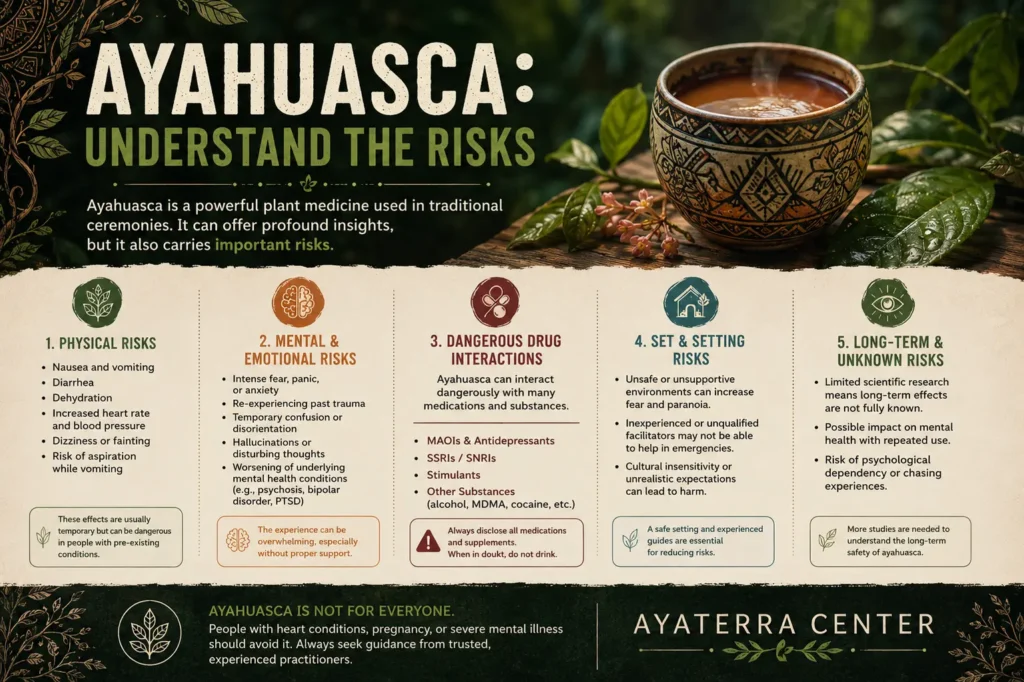
Ayahuasca is not risk-free. Careful screening changes the level of risk.
Some healthy adults tolerate traditional ayahuasca in controlled settings, but serious adverse events and medication interactions are possible. A responsible decision begins with honest health disclosure and qualified medical advice when needed.
This guide cannot determine whether ayahuasca is safe for you. Discuss personal risks with a qualified healthcare professional who knows your medical history.
Safety at a glance
Safety is not determined by whether someone is a beginner. It depends on health, medication use, psychological history, the preparation itself, and the quality of the setting and support.
Physical health
Cardiovascular, liver, neurological, and other significant conditions require careful professional assessment and may make participation inappropriate.
Medication interactions
Ayahuasca contains compounds that inhibit MAO-A. Combining it with certain serotonergic or other medicines may cause dangerous interactions.
Mental health history
A personal or family history of psychosis, mania, or bipolar-spectrum illness requires particular caution and professional evaluation.
Environment and support
Clear consent, sober support, small groups, appropriate supervision, and a plan for emergencies are essential questions when choosing a center.
Who should not take Ayahuasca?
No online checklist can replace an individual assessment. The following situations should be disclosed before booking and may require postponing or declining participation.
Do not proceed without clearance
Higher-risk situations
- Pregnancy or breastfeeding
- Serious cardiovascular or uncontrolled blood-pressure conditions
- History of psychosis, mania, or certain bipolar-spectrum conditions
- Current use of medicines or substances that may interact with MAO inhibition
- Acute illness, intoxication, or unstable physical or psychological health
Needs individual review
Information to disclose
- All prescription and non-prescription medicines
- Supplements, herbal products, and recreational substances
- Previous psychiatric diagnoses or hospitalizations
- Heart, liver, neurological, endocrine, or seizure history
- Previous difficult reactions to psychedelics or plant medicines
Changing or discontinuing medication can itself be dangerous. Any decision must be made with the professional who prescribed it, not solely with a retreat provider.
Potential risks and side effects
Reported effects range from expected short-term discomfort to uncommon but serious physical or psychological events. Individual response cannot be predicted.
Physical effects
Nausea, vomiting, gastrointestinal discomfort, headache, dizziness, and temporary increases in heart rate or blood pressure may occur.
Psychological distress
Fear, confusion, panic, dissociation, or emotionally intense experiences can arise and may require close support.
Drug interactions
Potential interactions with antidepressants and other serotonergic or MAO-active substances are an important reason for medication screening.
Rare serious events
Seizures, severe agitation, prolonged psychiatric symptoms, and other medical emergencies have been reported, although the evidence base remains limited.
How responsible retreats reduce risk
A retreat cannot promise zero risk. It can, however, use a structured process to identify concerns early and provide a more controlled environment.
Confidential screening
Health history, mental health, medications, supplements, and recent substance use are reviewed before acceptance.
Clear preparation
Participants receive practical guidance about diet, substances, travel, rest, and what to expect before arriving.
Supported ceremony
Traditional guides and facilitators remain present in a dedicated setting, with group size and communication considered part of participant care.
Rest and integration
Time after the ceremony helps participants recover, reflect, communicate concerns, and avoid rushing immediately into travel or demanding activities.
At Ayaterra, acceptance is not automatic. We ask participants to complete confidential screening and to disclose relevant information honestly. If there is uncertainty about a condition or medication, professional medical guidance should come before booking.
Ayahuasca safety in Peru
Peru recognizes the traditional knowledge and uses associated with ayahuasca as part of the nation’s cultural heritage. That recognition protects an important Amazonian tradition, but it should not be interpreted as proof that every commercial retreat follows the same safety standards.
Before choosing a center, ask how screening works, who remains present during the ceremony, how communication is handled, what happens in an emergency, and what support is available afterward.
Frequently asked questions
Is Ayahuasca safe for beginners?
Previous experience is not the deciding factor. A first-time participant may be eligible after appropriate screening, while an experienced participant may still have a contraindication. Health history, medicines, preparation, and setting matter more.
Is Ayahuasca safe when guided by a shaman?
Experienced traditional guidance is important, but a title alone does not guarantee safety. Screening, informed consent, sober support, suitable facilities, clear boundaries, and an emergency plan should also be present.
Can I stop antidepressants before a ceremony?
Do not stop or alter prescribed medication on your own. Some medicines can interact with ayahuasca, while abrupt discontinuation can also cause harm. Speak with the prescribing clinician and disclose the medication during screening.
Are vomiting and purging always harmless?
Nausea and vomiting are commonly reported, but persistent vomiting, dehydration, loss of consciousness, severe chest pain, seizures, or unusual prolonged symptoms require appropriate attention. Never assume every reaction is simply part of the process.
Can a retreat guarantee that nothing will go wrong?
No. Responsible providers explain uncertainty rather than promising zero risk. Their role is to screen carefully, reduce avoidable risks, provide support, and be transparent about their procedures.
Confidential guidance from Ayaterra
Discuss your situation before choosing a retreat.
Tell us about your plans and questions. We will explain the screening process and help you understand the next step without pressure.