

Ayahuasca Retreat Peru for Beginners
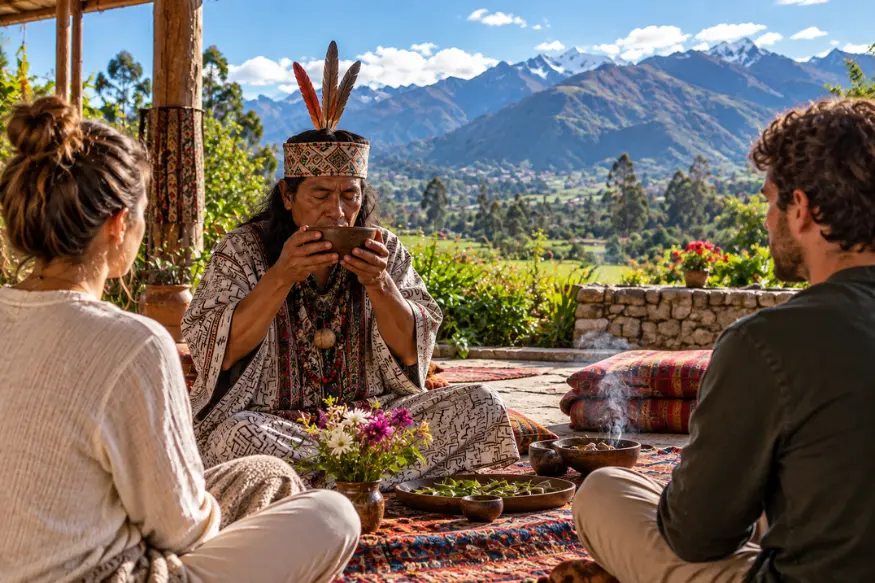
Choosing an ayahuasca retreat in Peru for beginners can be confusing.
If you have never participated in an ayahuasca ceremony before, you may be wondering how many days you should stay, how many ceremonies you should attend, whether you should choose Cusco or the Amazon, what kind of support you need, and how to tell whether a retreat is responsibly operated.
You do not need previous experience with ayahuasca to attend a retreat in Peru.
What matters more is choosing a retreat that provides appropriate screening, clear information, experienced practitioners, support during ceremonies, enough time to rest, and integration afterward.
This guide covers the most important things first-time participants should consider before choosing an ayahuasca retreat in Peru.
Is Peru a Good Place for Your First Ayahuasca Retreat?
Peru is one of the main destinations associated with traditional ayahuasca practices.
Ayahuasca has a long history of ceremonial use among Indigenous communities of the Peruvian Amazon, and today retreats can be found in several regions of the country.
The most common destinations include:
Cusco
The Sacred Valley
Iquitos
Pucallpa
These destinations provide very different experiences.
Iquitos and Pucallpa offer access to the Amazonian environment where many ayahuasca traditions developed.
Cusco and the Sacred Valley provide a mountain setting with easier access to hotels, transportation, restaurants, medical services, and major destinations such as Machu Picchu.
There is no single location that is right for every beginner.
Your decision should depend on the environment, retreat structure, practitioners, safety procedures, and level of support you are looking for.
Our guide to the best places for ayahuasca in Peru compares these destinations in greater detail.
Do You Need Experience Before Attending an Ayahuasca Retreat?
No.
Many people attending retreats in Peru are first-time participants.
A beginner-friendly retreat should therefore assume that you may know very little about what happens during a ceremony.
Before participating, you should receive clear information about:
How the ceremony works
What physical and psychological effects may occur
How to request assistance
What happens if you feel overwhelmed
Where bathrooms and facilities are located
Who remains with participants during the ceremony
What happens after the ceremony
How integration is handled
You should never feel embarrassed about asking basic questions.
For someone attending their first retreat, understanding the environment beforehand can remove a considerable amount of unnecessary uncertainty.
What Should Beginners Look for in an Ayahuasca Retreat?
The first question should not be:
Which retreat promises the most powerful experience?
A better question is:
How responsibly is the retreat operated?
For beginners, several factors deserve particular attention.
Medical and Health Screening
A retreat should ask about your health history and medications before accepting you as a participant.
Ayahuasca contains pharmacologically active compounds and can interact with certain medications and may be inappropriate for people with particular medical or psychiatric conditions.
Screening should therefore happen before you arrive, not five minutes before the ceremony.
Experienced Practitioners
Find out who conducts the ceremonies and what tradition they work within.
You should also know whether facilitators or assistants remain available throughout the ceremony.
Small or Manageable Groups
Group size matters.
A large number of participants can make individualized assistance more difficult if several people need support simultaneously.
Beginners may feel more comfortable in an environment where the ceremonial team can pay attention to each participant.
Clear Ingredients
Ask what is actually contained in the brew.
Traditional recipes vary, and participants should know what they are consuming.
Integration
Support should not end when the ceremony finishes.
A retreat should provide an opportunity to discuss, reflect on, and process the experience afterward.
We cover these and other warning signs in our guide on how to choose a safe ayahuasca retreat.
How Long Should a Beginner Ayahuasca Retreat Be?
There is no universally correct retreat length for beginners.
In Peru, you can find retreats lasting from a single day to several weeks.
For a first experience, the most useful way to compare them is by considering how much time you have for preparation, ceremonies, rest, and integration.
| Retreat length | Typical fit for a beginner |
|---|---|
| 1 day | A short introduction with limited retreat time |
| 2 days | One ceremony with additional time for preparation and initial integration |
| 3 days | More immersive experience with time between activities |
| 5 days | More time for multiple ceremonies, rest, and integration |
| 7+ days | Longer immersive retreat requiring a greater time commitment |
A longer retreat is not automatically better.
Likewise, choosing the shortest option solely because you are nervous is not necessarily the best approach.
Consider how much time you realistically want to spend away from your normal routine and how much recovery time the schedule provides.
How Many Ayahuasca Ceremonies Should a Beginner Do?
There is no required number.
Some first-time participants attend one ceremony.
Others choose a retreat containing two or three ceremonies.
More ceremonies do not guarantee a better experience.
Ayahuasca experiences can vary considerably from one ceremony to another, and rest between ceremonies can be important.
If you are deciding between retreat lengths, read our complete guide to how many ayahuasca ceremonies.
The important point for a beginner is not to treat ceremony count as a challenge or achievement.
Choose a retreat structure that gives you adequate time for preparation, rest, and reflection.
1-Day vs 3-Day vs 5-Day Retreat for Beginners
The right length depends largely on what you want from the retreat.
1-Day Retreat
A 1-Day Ayahuasca Retreat can suit travelers who want a single ceremonial experience and cannot commit to several days.
The disadvantage is that the experience is compressed into a much shorter period.
3-Day Retreat
For many first-time participants, a 3-Day Ayahuasca Retreat provides a balance between time commitment and immersion.
At Ayaterra, the three-day program includes two ceremonies, with time for rest and reflection between them. No previous ayahuasca experience is required.
5-Day Retreat
A 5-Day Ayahuasca Retreat provides additional time for ceremonies, rest, and integration.
This may suit beginners who prefer a more immersive experience rather than fitting everything into a short visit.
The important difference is not simply the number of days.
Look at the actual itinerary.
Two retreats advertised as “five days” may have very different schedules, ceremony counts, group sizes, and levels of support.
Cusco or Iquitos for Your First Ayahuasca Retreat?
This is one of the biggest decisions for travelers coming to Peru.
Cusco and the Sacred Valley
The Sacred Valley offers a quieter mountain environment while remaining accessible from Cusco.
For international travelers, this can make logistics relatively straightforward.
You can arrive in Cusco, spend time acclimatizing, travel to the retreat, and continue to other destinations in southern Peru afterward.
Iquitos
Iquitos offers a very different experience.
It is located in the Peruvian Amazon and is accessible primarily by air or river rather than road from the rest of Peru.
Retreats outside the city can provide a much deeper jungle environment.
For some travelers, that isolation is exactly what they want.
Others may prefer the accessibility and mountain environment of the Sacred Valley.
Neither destination is inherently better for a beginner.
We compare the differences in our guide to Cusco vs Iquitos for an ayahuasca retreat.
What Happens at Your First Ayahuasca Retreat?
Although every center has its own program, a structured retreat generally begins before the ceremony itself.
You may go through:
Arrival and orientation
Health and preparation review
Introduction to the practitioners and facilitators
Explanation of the ceremony
Time to rest and prepare
Ayahuasca ceremony
Post-ceremony rest
Integration or discussion afterward
Longer retreats repeat parts of this cycle over several days.
Between ceremonies, participants may spend considerable time resting, eating, walking, reflecting, or speaking with facilitators.
A retreat is therefore not several consecutive days of continuous ceremonies.
The time between them is part of the experience.
What Is the First Ayahuasca Ceremony Like?
Your first ceremony can involve a mixture of anticipation and uncertainty.
After drinking the brew, effects do not necessarily begin immediately.
As they develop, experiences can include changes in perception, physical sensations, introspection, emotional responses, nausea, visual imagery, or changes in the perception of time.
Not everyone experiences the same effects.
Some participants have vivid visions.
Others experience relatively few visuals.
Some vomit, while others do not.
You should not approach your first ceremony with a checklist of things that are supposed to happen.
Our ayahuasca ceremony experience guide explains the ceremony itself step by step.
What If You Are Nervous Before Your First Retreat?
Being nervous does not automatically mean you are unprepared.
You are considering an experience that can be physically and psychologically intense and that you have never experienced before.
Questions and uncertainty are reasonable.
What matters is whether you have enough information to make an informed decision.
Before booking, you should feel comfortable asking the retreat about screening, ingredients, practitioners, group size, accommodations, emergency procedures, ceremony support, and integration.
If a center avoids reasonable questions or pressures you to book quickly, consider that information when making your decision.
What If You Do Not Have Visions?
Nothing is necessarily wrong.
Ayahuasca experiences vary widely.
Some people report complex visual experiences, while others primarily experience emotions, thoughts, memories, bodily sensations, or introspection.
The absence of dramatic visuals does not automatically mean that the brew was ineffective.
It is better for beginners to avoid arriving with the expectation that they must see particular colors, animals, spirits, geometric patterns, or other imagery.
Expectations can make it harder to simply observe your actual experience.
What If You Do Not Vomit?
You do not have to vomit for an ayahuasca ceremony to “work.”
Nausea and vomiting are common, but they are not universal.
Traditional Amazonian interpretations may give purging ceremonial or spiritual significance, but participants should not deliberately force themselves to vomit.
You can read more about nausea and vomiting in our guide to ayahuasca purging.
Can You Stop or Skip a Ceremony?
You should never feel obligated to participate in another ceremony simply because it is included in the package you purchased.
After one ceremony, you may decide that you need additional rest.
You may also want to discuss your experience with the facilitators or practitioner before deciding whether to participate again.
A responsible retreat should respect a participant’s decision not to drink.
More ayahuasca is not automatically better.
How Much Does a Beginner Ayahuasca Retreat in Peru Cost?
Prices vary considerably depending on location, duration, accommodations, number of ceremonies, practitioner experience, group size, transportation, meals, staffing, and other services.
A short retreat can cost considerably less than a week-long residential program.
However, beginners should be careful about choosing solely by price.
A very inexpensive retreat may exclude services that matter, while a very expensive retreat is not automatically safer or better.
Compare exactly what is included.
Our Ayahuasca Retreat Cost in Peru guide provides a more detailed breakdown of retreat pricing.
What Should Be Included in a Beginner-Friendly Retreat?
At minimum, look for clear information about:
Pre-retreat screening
Ceremony supervision
Practitioners and facilitators
Accommodation
Meals
Transportation
Group size
Number of ceremonies
Rest periods
Integration
Emergency procedures
What is contained in the brew
Do not assume something is included simply because another retreat provides it.
Read the itinerary and inclusions carefully before paying a deposit.
What Should You Bring?
Packing depends on where in Peru you are attending the retreat.
For the Sacred Valley, temperatures can change considerably between daytime and nighttime.
Useful items may include comfortable layered clothing, warm clothing for evenings, personal toiletries, a reusable water bottle, simple footwear, and any other items requested by the retreat.
You usually do not need to bring excessive equipment.
Our ayahuasca retreat packing list covers what to bring in greater detail.
Should You Travel Alone to an Ayahuasca Retreat in Peru?
Many international participants travel to Peru alone.
Whether you are comfortable doing so depends on your travel experience and the logistics provided by the retreat.
For solo travelers, transportation arrangements become especially important.
Know where you will be picked up, who will meet you, how you will reach the retreat center, and where you will be taken when the program finishes.
It can also be helpful to spend at least some time in Peru before immediately entering a retreat after a long international journey.
Questions Beginners Should Ask Before Booking
Before paying for an ayahuasca retreat in Peru, ask:
Who conducts the ceremonies?
How many participants attend each ceremony?
Are facilitators present throughout the night?
What exactly is in the ayahuasca brew?
What medical or health screening is required?
How many ceremonies are included?
Can I skip a ceremony?
What happens if I need help during the ceremony?
What happens in an emergency?
Is integration included?
What accommodation is provided?
Are meals included?
Is transportation from Cusco or the airport included?
What should I do before arriving?
What medications or health conditions must I disclose?
A trustworthy retreat should be able to answer these questions clearly.
Ayahuasca Retreats for Beginners at Ayaterra
Ayaterra offers ayahuasca retreats in Peru’s Sacred Valley for both first-time and returning participants.
Previous experience with ayahuasca is not required.
Our programs include preparation, accommodation for multi-day retreats, transportation from Cusco, ceremonies guided by Shipibo-Konibo shamans, bilingual support, meals according to the retreat program, and post-ceremony integration.
Groups are kept small so participants can receive more individual attention throughout the retreat.
Before participating, guests complete a screening process and receive preparation guidance.
Beginners can choose between shorter introductory formats and longer multi-day retreats depending on how much time they want for ceremonies, rest, and integration.
Frequently Asked Questions
Is an ayahuasca retreat suitable for beginners?
Yes, many retreats accept people with no previous ayahuasca experience. Beginners should prioritize screening, experienced practitioners, ceremony supervision, manageable group sizes, and integration support.
How many days should my first ayahuasca retreat be?
There is no universal number. Short programs provide an introduction, while three- to five-day retreats provide more time for rest and additional ceremonies. Consider the actual itinerary rather than duration alone.
How many ceremonies should I do for my first retreat?
Some beginners attend one ceremony, while others attend two or more during a multi-day retreat. More ceremonies do not automatically produce a better experience.
Is Cusco good for a first ayahuasca retreat?
Cusco and the Sacred Valley are popular options because they combine a quiet mountain setting with access to Cusco’s tourism and transportation infrastructure.
Do I need previous psychedelic experience?
No. Previous psychedelic or ayahuasca experience is not a requirement for attending a beginner-friendly retreat. Appropriate screening and preparation are more important.
Should I choose the cheapest ayahuasca retreat?
Price should not be your only criterion. Compare screening, practitioners, group size, accommodations, ceremony supervision, integration, transportation, and emergency procedures.
Can I attend an ayahuasca retreat alone?
Yes. Many international travelers attend retreats alone. Confirm transportation arrangements and the support available before, during, and after the retreat.
Can I skip a ceremony if I do not feel ready?
You should be able to decline participation. A retreat should not pressure you to consume ayahuasca simply because another ceremony is included in your program.