

First Ayahuasca Ceremony: What to Expect & How to Prepare
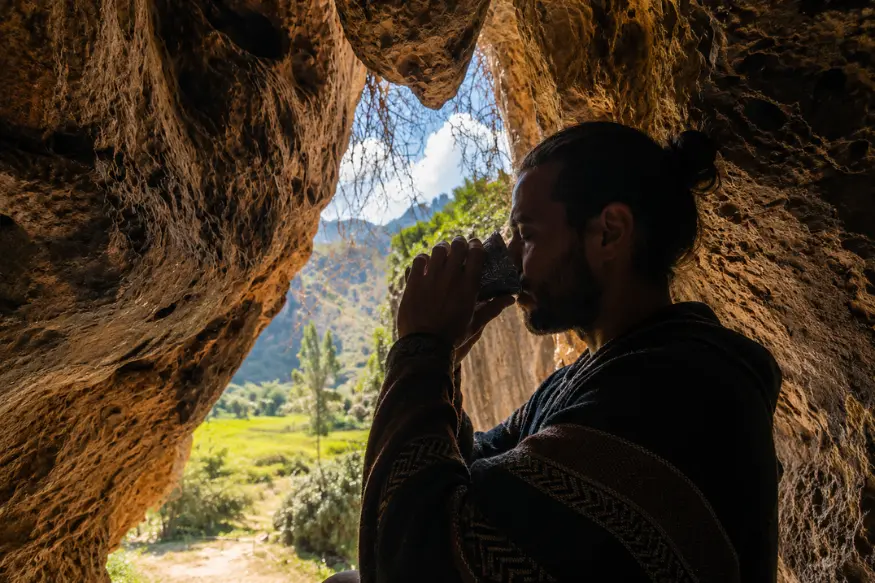
Your first Ayahuasca ceremony can bring a mix of curiosity, excitement, and uncertainty. Even after reading about other people’s experiences, it is difficult to know exactly what your own ceremony will feel like.
That is because there is no single Ayahuasca experience. Some people experience strong emotions or vivid imagery, while others have a quieter and more introspective night. Physical sensations, memories, periods of discomfort, and moments of calm can all be part of the experience.
If you are preparing for your first Ayahuasca ceremony, understanding how the process typically works can help you arrive better informed and with more realistic expectations.
What Is an Ayahuasca Ceremony?
An Ayahuasca ceremony is a traditional practice centered around drinking Ayahuasca, an Amazonian plant preparation commonly made from the Banisteriopsis caapi vine and leaves containing DMT, traditionally including chacruna (Psychotria viridis).
In traditional Amazonian contexts, Ayahuasca is not simply consumed on its own. The ceremony is guided by experienced practitioners who oversee the environment and participants throughout the experience.
Ceremonies are generally held at night in a quiet, controlled space. Depending on the tradition, they may include traditional songs known as icaros, periods of silence, individual attention from the shaman, and other ceremonial practices.
What to Expect During Your First Ayahuasca Ceremony
Knowing the basic sequence can make the experience feel less unfamiliar.
Although every retreat follows its own practices, a first ceremony will commonly involve preparation, drinking Ayahuasca, waiting for its effects to begin, several hours of ceremonial work, and a period of rest afterward.
Before the Ceremony
Preparation normally begins well before the night itself.
A responsible retreat should ask about your medical history, medications, supplements, and other factors that could affect your suitability for Ayahuasca.
You may also be given dietary recommendations for the days before the ceremony. These commonly involve eating simple foods and avoiding alcohol, recreational drugs, heavy meals, and certain medications or supplements that may interact with Ayahuasca.
Do not stop prescription medication simply to participate in a ceremony without appropriate medical guidance.
On the day of the ceremony, participants are usually encouraged to eat lightly and arrive without a heavy meal.
Drinking Ayahuasca
At the beginning of the ceremony, participants receive an individual serving of Ayahuasca.
The taste is often described as earthy, bitter, and intense. After drinking it, participants generally return to their places and remain quiet while waiting for the effects to develop.
You do not need to immediately feel something for the Ayahuasca to be “working.” The onset and intensity can differ considerably from one person to another.
When Does Ayahuasca Start Working?
Effects frequently begin around 30 to 60 minutes after drinking, although the timing varies.
The first changes may be subtle. You might notice alterations in body temperature, increased awareness of sounds, unusual physical sensations, changes in perception, nausea, or a shift in your emotional state.
For others, the transition can be much more noticeable.
Trying to compare your experience with the person beside you is rarely useful. Two people drinking during the same ceremony can have completely different experiences.
What Does Your First Ayahuasca Ceremony Feel Like?
This is probably the biggest question for first-time participants, and unfortunately, there is no precise answer.
Ayahuasca can affect physical sensations, emotions, thoughts, and perception.
Possible experiences include:
Vivid imagery, colors, patterns, or dreamlike scenes
Memories or emotionally significant moments
Changes in your perception of time
Intense introspection
Feelings of fear, sadness, gratitude, joy, or calm
Nausea or gastrointestinal discomfort
Vomiting or other forms of purging
Periods where very little seems to happen
Not everyone experiences visions.
A quiet ceremony is not necessarily an unsuccessful ceremony, just as having dramatic visions does not automatically mean someone had a more meaningful experience.
Will I Have Visions During My First Ceremony?
Maybe, but they should not be treated as a guarantee.
Some participants report geometric patterns, landscapes, people, animals, memories, or highly abstract imagery. Others primarily experience emotional or physical effects.
Some people experience few visual effects at all.
Going into your first ceremony expecting a particular vision can create unnecessary frustration. It is generally better to approach the experience without trying to force a specific outcome.
Is Purging Normal During Ayahuasca?
Vomiting is one of the most widely known physical effects associated with Ayahuasca ceremonies.
However, not everybody vomits.
Nausea, sweating, shaking, crying, bowel movements, and other physical responses can also occur. In many traditional contexts, these responses are collectively understood as forms of purging.
This is one reason the ceremonial environment matters. Participants should have appropriate facilities and experienced people available to assist them when necessary.
How Long Does an Ayahuasca Ceremony Last?
The strongest effects of Ayahuasca commonly last for several hours, although individual experiences vary.
A ceremony itself may continue for approximately 4 to 6 hours or longer, depending on the tradition, preparation, dose, and participants.
The intensity usually rises, reaches a peak, and gradually decreases.
You may still feel emotionally sensitive, reflective, tired, or unusually alert after the main effects have subsided.
For this reason, you should not plan to drive or undertake demanding activities immediately after a ceremony.
Is It Normal to Feel Afraid Before Your First Ayahuasca Ceremony?
Yes. Nervousness before a first ceremony is understandable.
You are entering an unfamiliar experience that can temporarily alter your perception and emotional state. Even people who have carefully prepared may feel nervous once the ceremony is about to begin.
What matters is how those concerns are handled.
Before participating, you should understand who will conduct the ceremony, who will remain with participants throughout the night, what happens if you need assistance, and what safety procedures the retreat follows.
You should also feel comfortable asking questions before agreeing to participate.
Can a First Ayahuasca Ceremony Be Difficult?
Yes.
Ayahuasca experiences are sometimes described online using words such as beautiful, transformative, or spiritual. Those experiences certainly exist, but they are not the whole picture.
A ceremony can also involve fear, confusion, uncomfortable physical sensations, difficult memories, sadness, or periods of intense emotional processing.
A challenging experience does not automatically mean something has gone wrong. At the same time, serious physical or psychological symptoms should never simply be dismissed as part of “the process.”
Experienced supervision and appropriate screening are important precisely because participants can respond differently.
How to Prepare for Your First Ayahuasca Ceremony
Preparation should focus less on trying to control the experience and more on arriving physically and mentally prepared.
Follow the retreat’s dietary instructions, avoid alcohol and recreational substances, disclose medications and relevant health information honestly, sleep properly when possible, and ask questions about anything you do not understand.
It can also help to reduce unnecessary stimulation in the days immediately before the ceremony.
Some participants choose to arrive with an intention—a question, area of their life they want to explore, or simply a willingness to observe what arises.
An intention can provide direction, but it should not become an expectation that a specific experience must occur.
Choosing a Safe Setting for Your First Ceremony
For a first-time participant, choosing where to attend may be more important than trying to predict what Ayahuasca will feel like.
Before booking, look beyond photographs and testimonials.
A responsible retreat should be transparent about its screening process, facilitators, ceremonial supervision, accommodation, emergency procedures, preparation requirements, and what support is available before and after the ceremony.
Ask who will actually be present during your ceremony and how many participants will attend.
Small details matter when you are spending several hours in an altered state of consciousness.
Your First Ayahuasca Ceremony in Peru
Peru is one of the primary destinations for people interested in experiencing Ayahuasca within the country where many of its ceremonial traditions developed.
Different regions offer very different environments.
Iquitos and other Amazonian areas provide a tropical jungle setting, while Cusco and the Sacred Valley offer a highland environment surrounded by the Andes.
Neither setting automatically makes a ceremony better. For a first-time participant, the quality of the retreat, experience of the practitioners, screening procedures, group size, and level of support are generally more important considerations than the destination alone.
If you are considering an Ayahuasca retreat in Peru, take time to understand exactly what the program includes before making your decision.
What Happens After Your First Ayahuasca Ceremony?
The end of the ceremony is not necessarily the end of the experience.
You may wake up the following morning feeling peaceful and clear, emotionally sensitive, tired, confused, energized, or simply normal.
Avoid putting pressure on yourself to immediately understand everything that happened.
Memories and emotions from the ceremony may make more sense over the following days.
This period is commonly referred to as Ayahuasca integration.
Journaling, resting, spending time in nature, speaking with experienced facilitators, and gradually returning to your normal routine can help you reflect on the experience without rushing to conclusions.
Should Your First Experience Be One Ceremony or a Multi-Day Retreat?
There is no universal answer.
A single ceremony can be appropriate for someone who wants a shorter introduction, while multi-day retreats provide additional time for rest, reflection, integration, and—in some programs—more than one ceremony.
More ceremonies do not automatically mean better results.
When comparing programs, consider the complete structure rather than simply counting ceremonies. Accommodation, supervision, preparation, integration, group size, and time between ceremonies can all influence the overall experience.
First Ayahuasca Ceremony Tips
Keep your expectations flexible. Experiences you have read online belong to other people and cannot predict your own.
Be completely honest during medical screening and disclose medications, supplements, and relevant health information.
Follow the preparation instructions provided by your retreat.
Wear comfortable clothing and bring only the items the retreat recommends.
Ask for assistance when you need it. There is no reason to remain silent simply because other participants appear comfortable.
Finally, give yourself time afterward. You do not need to decide what the experience “meant” the moment the ceremony ends.
Frequently Asked Questions
What happens at your first Ayahuasca ceremony?
Participants generally receive Ayahuasca in a supervised ceremonial environment and remain in the space for several hours while its effects develop and gradually subside. Experiences can include physical sensations, emotional changes, introspection, visions, nausea, purging, or periods of relative calm.
How long does your first Ayahuasca ceremony last?
The main effects commonly continue for several hours. Many ceremonies last approximately 4–6 hours or longer, depending on the tradition and individual circumstances.
Will I vomit during my first Ayahuasca ceremony?
Not necessarily. Vomiting is common, but some participants do not vomit at all. Other physical responses can include nausea, sweating, shaking, crying, or gastrointestinal effects.
What should I bring to my first Ayahuasca ceremony?
Requirements vary between retreats. Comfortable clothing, warm layers when necessary, water, and personal essentials may be recommended. Your retreat should provide a specific packing and preparation list.
Should I be nervous about my first Ayahuasca ceremony?
Feeling nervous before an unfamiliar and potentially intense experience is common. Learning how the ceremony works, asking questions, choosing experienced practitioners, and understanding the retreat’s safety procedures can reduce unnecessary uncertainty.
Can I take medication before an Ayahuasca ceremony?
Some medications and substances can interact dangerously with Ayahuasca. Always disclose medications and supplements during screening. Do not stop prescribed medication solely to attend an Ayahuasca ceremony without appropriate medical guidance.
Do I need experience with psychedelics before trying Ayahuasca?
No. Previous psychedelic experience is not a requirement. More important considerations include appropriate screening, preparation, realistic expectations, and participating in a properly supervised environment.
What should I do after my first Ayahuasca ceremony?
Give yourself time to rest and process the experience. Journaling, quiet reflection, spending time in nature, and participating in integration conversations can help you examine what happened without immediately trying to assign meaning to every part of the experience.
Final Thoughts
Your first Ayahuasca ceremony does not need to match anyone else’s story.
It may be visual or non-visual, peaceful or challenging, deeply emotional or surprisingly subtle. Going into the experience with realistic expectations can be more useful than trying to predict exactly what will happen.
Prepare carefully, choose the people and setting responsibly, ask questions before participating, and allow yourself time afterward to process the experience.
The goal should not be to chase a dramatic ceremony. It should be to approach your first experience informed, prepared, and supported.