

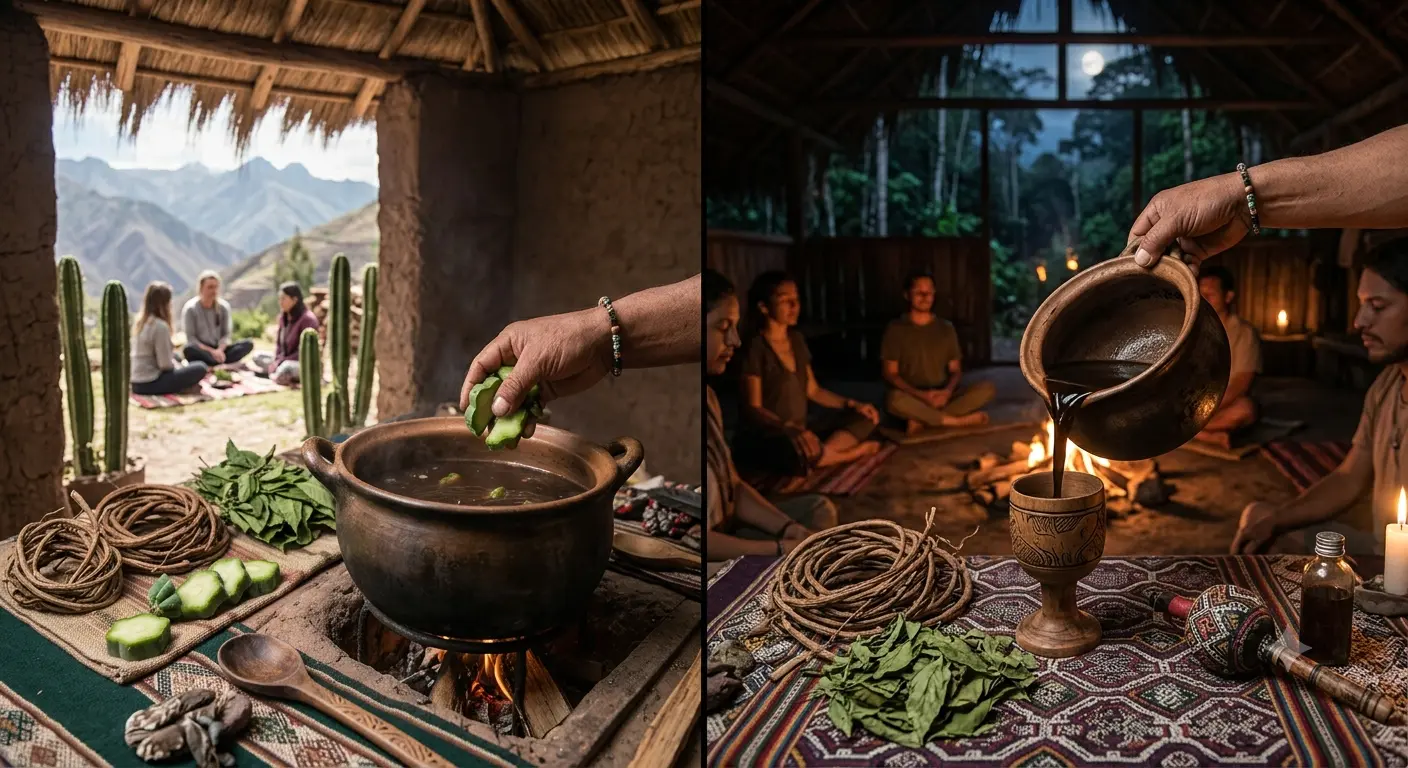
Many people interested in traditional plant medicine eventually ask the same question:
Can you combine ayahuasca and San Pedro?
The answer is yes—but not at the same time.
Across Peru, many experienced retreat centers combine both sacred medicines within the same program, offering them in separate ceremonies over several days rather than together. This approach allows participants to experience the unique qualities of each medicine while giving the body and mind enough time to rest, reflect, and integrate.
Although ayahuasca and San Pedro share the common goal of promoting healing and self-discovery, they are very different medicines with distinct traditions, effects, and ceremonial practices.
Many participants discover that combining both creates a more balanced journey—one that includes deep emotional exploration as well as gentle integration and connection with nature.
If you’re still deciding which medicine is right for you, it’s worth understanding the differences first. Our guide on Ayahuasca vs. San Pedro explains how each ceremony differs and who may benefit most from each experience.
How Are Ayahuasca and San Pedro Different?
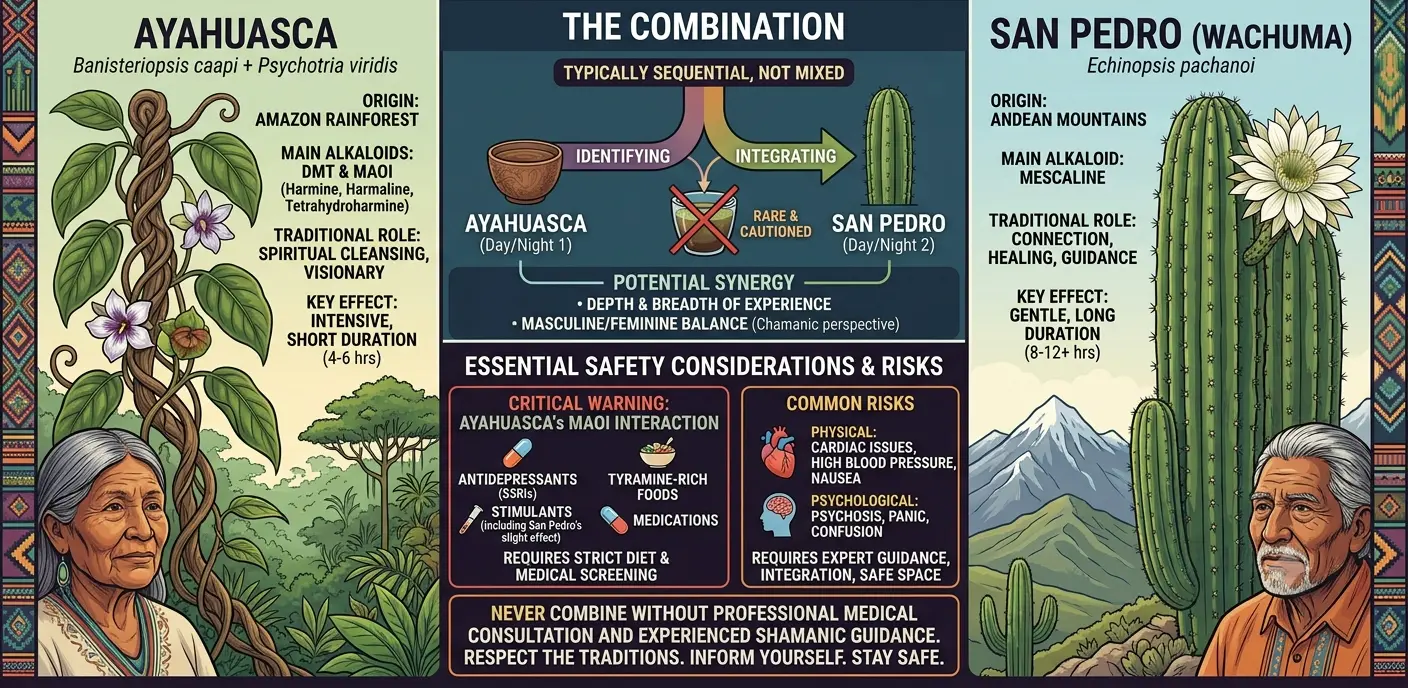
Ayahuasca and San Pedro are both sacred plant medicines native to South America, but they come from different traditions and are experienced in very different ways.
Ayahuasca originates from the Amazon rainforest and has been used for generations by Indigenous communities for healing, spiritual guidance, and emotional cleansing. Ceremonies are typically held at night in a quiet environment, allowing participants to turn inward and explore their thoughts, emotions, and subconscious mind.
San Pedro, also known as Wachuma, has deep roots in the Andean tradition. Unlike ayahuasca, San Pedro ceremonies usually take place during the day, often outdoors in the mountains or surrounded by nature. Participants frequently describe the experience as more heart-centered, peaceful, and deeply connected to the natural world.
Rather than asking which medicine is “better,” many facilitators encourage participants to understand how each one serves a different purpose. If you’d like a deeper comparison, read our article on Ayahuasca vs. San Pedro, where we explore their traditions, effects, and ceremonial differences in detail.
Why Do Many Retreats Combine Both Medicines?
One of the biggest reasons experienced retreat centers combine ayahuasca and San Pedro is because the medicines often complement one another.
Ayahuasca is commonly associated with profound emotional healing. Many participants describe confronting old memories, releasing emotional burdens, and gaining new perspectives about their lives. While these experiences can be deeply meaningful, they can also feel emotionally intense.
San Pedro offers a different kind of experience.
Rather than encouraging deep introspection, it often helps participants reconnect with themselves, nature, and the present moment. Many people describe San Pedro as bringing feelings of gratitude, peace, openness, and emotional balance.
Because of these complementary qualities, some retreat centers begin with ayahuasca and later introduce San Pedro as part of the integration process.
If you’re curious about the specific benefits of experiencing both medicines together, you may also enjoy reading Benefits of Combining Ayahuasca and San Pedro, where we explore why this combination has become increasingly popular among participants seeking a more complete healing journey.
Is It Safe to Combine Ayahuasca and San Pedro?
Yes—when done responsibly.
The key is understanding that responsible retreat centers do not serve both medicines together during the same ceremony.
Instead, each ceremony takes place on separate days under the guidance of experienced shamans and trained facilitators. This schedule allows participants to recover physically, process their emotions, and prepare mentally before the next experience.
Safety depends far more on the retreat center than on the combination itself.
Before booking any retreat, consider whether the center provides:
- A detailed medical screening before acceptance.
- Experienced traditional shamans.
- English-speaking facilitators.
- Small participant groups.
- Clear preparation guidelines.
- Integration support after the ceremonies.
Choosing a well-organized retreat is one of the most important decisions you’ll make. If you’re still researching your options, our guide on How to Choose an Ayahuasca Retreat in Peru explains the key factors to compare before making a reservation.
You should also understand the importance of preparation and responsible practices. Our Ayahuasca Safety Guide covers the precautions every participant should know before attending a ceremony.
Why Is Ayahuasca Usually Experienced Before San Pedro?
Although every retreat follows its own traditions, many experienced facilitators choose to begin with ayahuasca before introducing San Pedro later in the program.
The reason is simple.
Ayahuasca is often seen as a medicine that encourages deep emotional exploration. Participants may confront unresolved emotions, limiting beliefs, or important life questions that require time to process.
San Pedro, on the other hand, is frequently experienced as a medicine of integration. Rather than leading participants deeper into introspection, it often helps them reconnect with the present moment, appreciate nature, and apply the insights gained during the ayahuasca ceremony.
This sequence creates a natural progression—from inner healing to outward connection.
If you’d like to understand why many retreat centers follow this order, read our complete guide on Ayahuasca Before San Pedro or After?, where we explain the traditions behind this approach.
What Are the Benefits of Combining Ayahuasca and San Pedro?
Although every journey is unique, many participants report that experiencing both medicines within the same retreat provides a more complete healing process.
Some of the most commonly reported benefits include:
- Deeper emotional awareness.
- Better integration of personal insights.
- A stronger connection with nature.
- Greater emotional balance.
- Increased gratitude and self-awareness.
- Time to process between ceremonies.
- Exposure to both Amazonian and Andean healing traditions.
Instead of viewing the medicines as alternatives, many participants discover that they complement each other remarkably well.
We explore these advantages in greater detail in our article on Benefits of Combining Ayahuasca and San Pedro.
What Happens Between Ceremonies?
One of the biggest misconceptions is that participants simply attend one ceremony after another.
In reality, the days between ceremonies are often just as important.
Many retreat centers include time for:
- Rest and recovery.
- Healthy meals that follow the recommended diet.
- Personal reflection.
- Conversations with facilitators.
- Nature walks.
- Journaling.
- Quiet meditation.
This period allows participants to process their experience before beginning the next ceremony.
Without proper integration, even meaningful experiences can become difficult to understand.
If you’d like to learn more about this important stage of the journey, our guide on San Pedro Integration After Ayahuasca explains how integration supports long-term healing.
What Can You Expect During a Combined Retreat?
Every retreat follows its own schedule, but a typical combined program often includes separate ceremonies spread across several days.
Participants usually receive preparation guidance before arriving, followed by medical screening, orientation, and support throughout the retreat.
Depending on the program, the experience may include:
- Traditional ayahuasca ceremonies.
- San Pedro (Wachuma) ceremonies.
- Comfortable accommodation.
- Healthy meals.
- Transportation.
- Small participant groups.
- Integration sessions.
- Ongoing facilitator support.
Rather than rushing from one ceremony to another, participants are given time to fully experience each stage of the journey.
If you’re curious about the day-by-day experience, read What to Expect from an Ayahuasca and San Pedro Retreat.
Who Should Consider an Ayahuasca and San Pedro Retreat?
A combined retreat may be an excellent option for people who:
- Want a more complete healing experience.
- Feel drawn to both Amazonian and Andean traditions.
- Have enough time for a multi-day retreat.
- Appreciate gradual emotional integration.
- Prefer a structured and professionally guided program.
However, it isn’t necessarily the right choice for everyone.
Some participants prefer beginning with a single ayahuasca ceremony before exploring additional plant medicines in the future.
If you’re still deciding, our guide Is an Ayahuasca and San Pedro Retreat Right for You? can help you evaluate whether a combined program matches your personal goals.
Explore Our Ayahuasca & San Pedro Retreats
If you’re interested in experiencing both sacred medicines within a carefully guided program, explore our retreat options designed to balance deep healing with meaningful integration.
- Authentic 3-Day Ayahuasca & San Pedro Healing Experience
- Traditional 4-Day Ayahuasca & San Pedro Retreat
Both programs are led by experienced facilitators and combine Amazonian and Andean traditions in the peaceful surroundings of Peru’s Sacred Valley.
Frequently Asked Questions
Can you take ayahuasca and San Pedro together?
Responsible retreat centers generally do not serve both medicines during the same ceremony. They are usually experienced on separate days to allow time for rest, preparation, and integration.
Is San Pedro stronger than ayahuasca?
The experiences are very different rather than stronger or weaker. Ayahuasca is commonly described as deeply introspective, while San Pedro is often associated with emotional openness, connection with nature, and gentle reflection.
Which medicine should you experience first?
Many retreats begin with ayahuasca followed by San Pedro because this sequence allows participants to first explore deep emotional work and later integrate those insights through the calming qualities of Wachuma.
Can beginners join an Ayahuasca and San Pedro retreat?
Yes. Many first-time participants choose combined retreats, provided they complete the required medical screening and receive guidance from experienced facilitators.
How long should an Ayahuasca and San Pedro retreat last?
Most combined retreats last between three and four days, allowing enough time for both ceremonies, preparation, rest, and integration.